
A Plant Walk Along ‘Aiea Loop Trail with Kenji
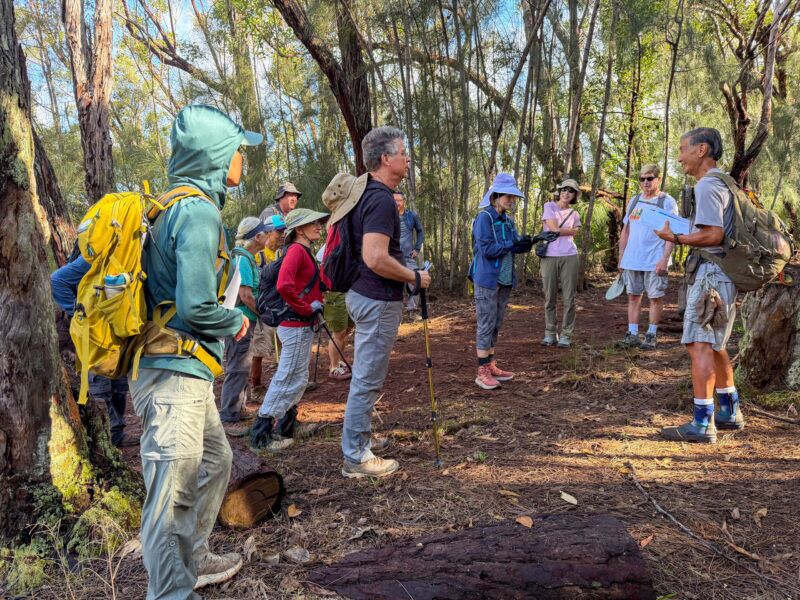
On Saturday, October 10, fifteen of us gathered at the entrance to Keaiwa Heiau State Recreation Area for an informative plant walk led by HTMC’s botanist extraordinaire, Ken “Kenji” Suzuki.
Before we set off, Kenji distributed booklets he had prepared and printed, titled Plants Found on the ‘Aiea Loop Trail. Complete with photographs and descriptions, the booklets are a wonderful reference of the plants we would encounter on this trail.
Kenji also shared a brief environmental history of the Hawaiian Islands, illustrated with photographs from the early 1900s depicting the denuded landscapes of Nu’uanu and Manoa valley along with Round Top. He explained how Hawai’i came to be known as the “extinction capital of the world.” Following the clearing of forests for natural resources and the expansion of plantations, which required reliable water supplies for their crops, botanists such as Harold L. Lyon were brought in to help reforest the islands. Many of the introduced species they selected were fast-growing and helped reduce erosion, but some later became invasive, spreading into native forests and threatening Hawai’i’s unique ecosystems.
To bring the history closer to home, Kenji asked us to look at the trees surrounding the parking area. Every one of them, he pointed out, was introduced rather than native to Hawai’i.
Have you ever wondered about the difference between native and invasive plants, or between indigenous and endemic species? A native or indigenous species occurs naturally in an area without human introduction and may also be found in other parts of the world. An endemic species, on the other hand, is found naturally in only one specific geographic region and nowhere else in the world. Kenji helped us begin to understand these distinctions, offering a simple way to think about invasive plants, stating “An invasive species is a plant out of place; in other places, it’s native.”
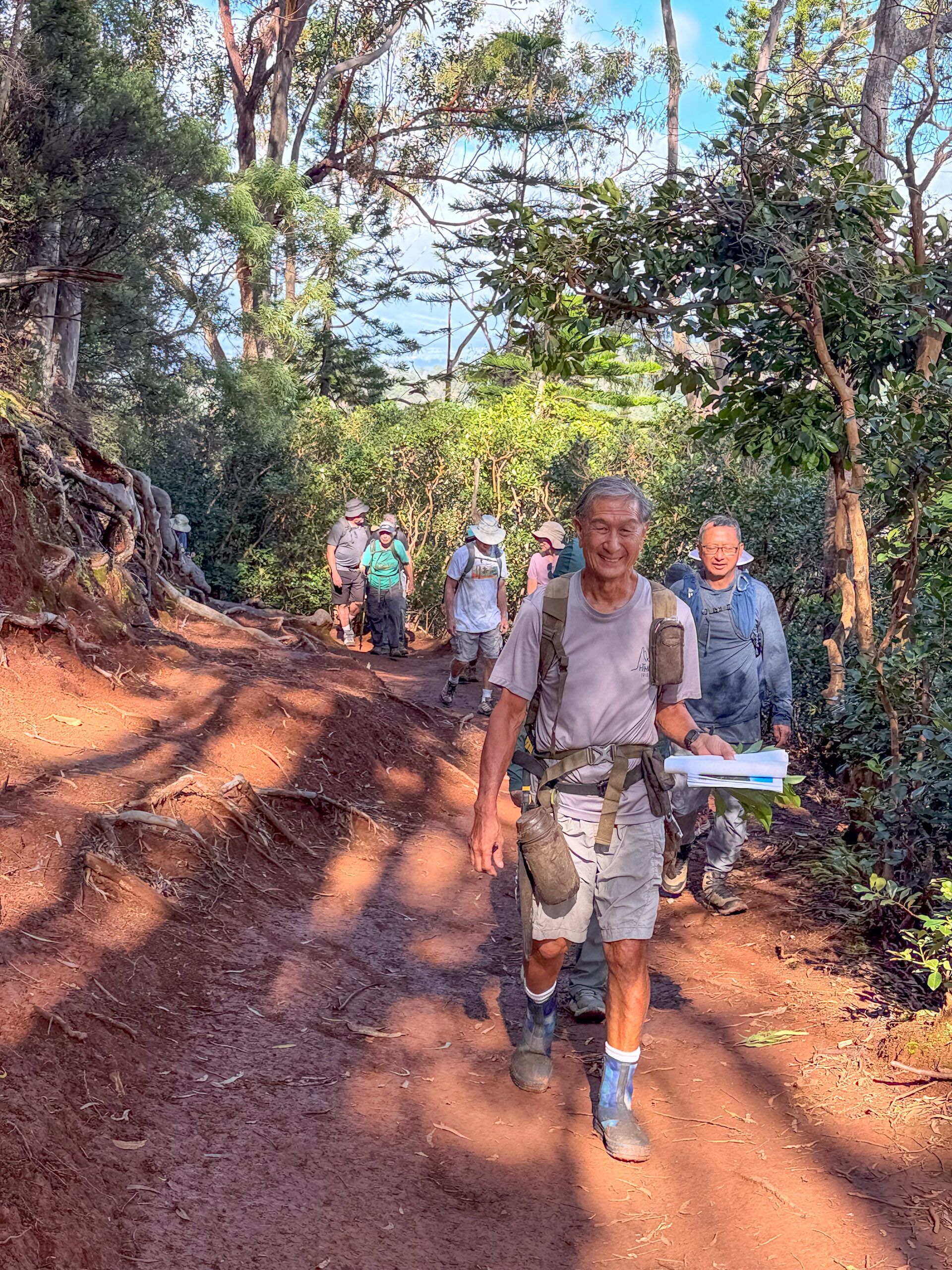
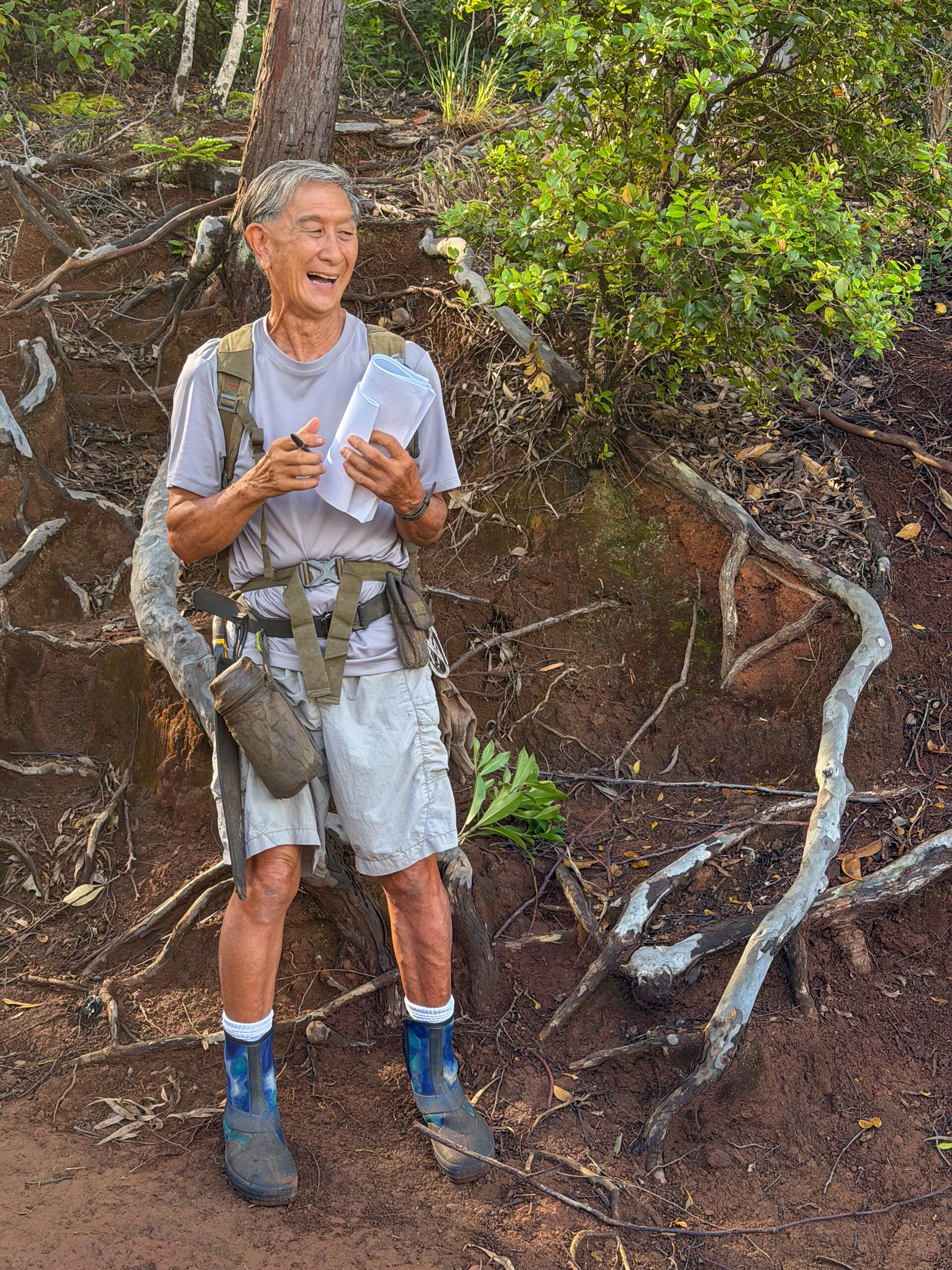
With our new background knowledge, we headed along the ‘Aiea Loop Trail, stopping frequently as Kenji identified plants and shared their histories. The walk offered a new perspective on a familiar hiking destination, reminding us that there is much more to discover when we slow down and look closely at the landscape around us.
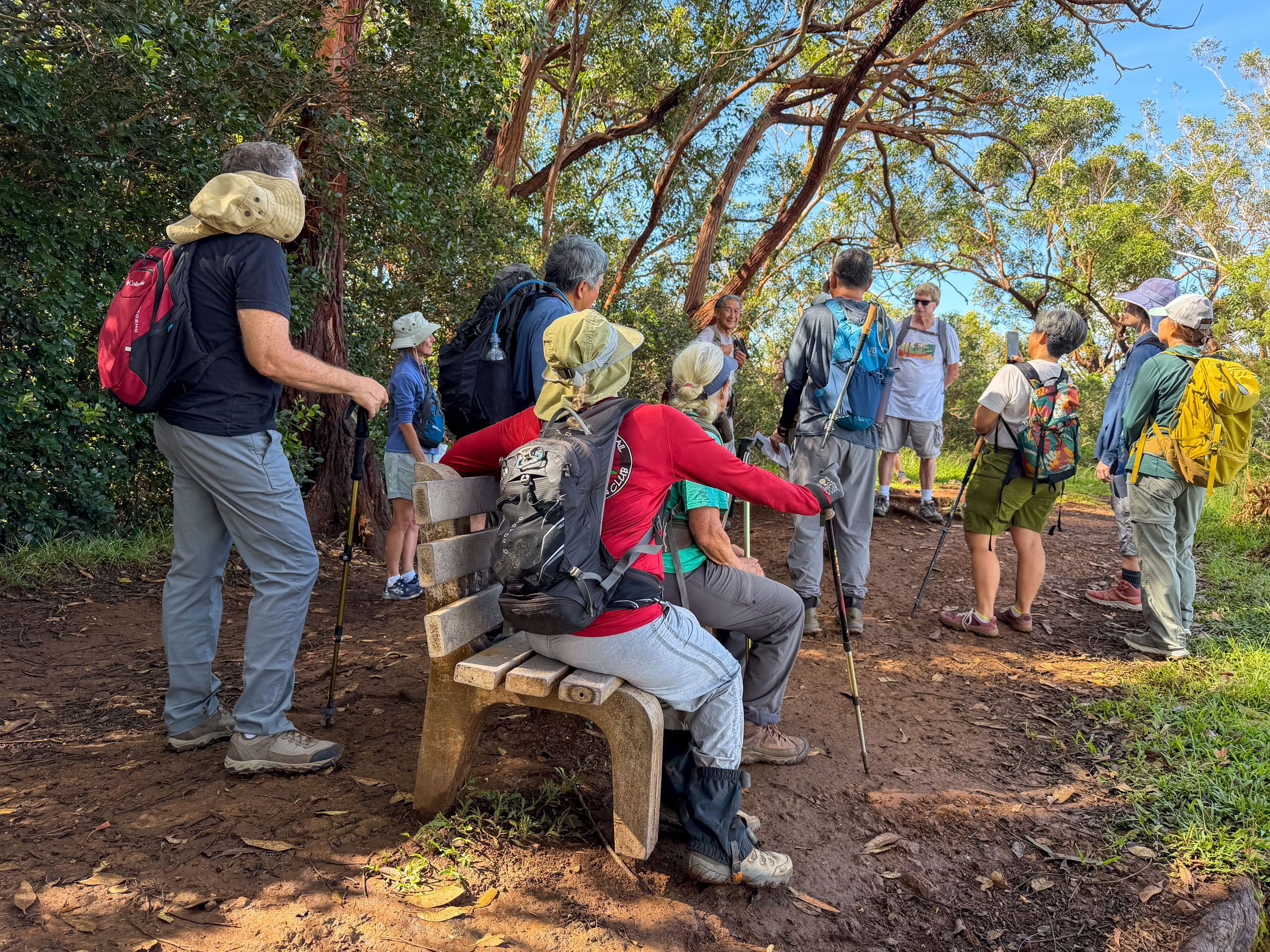
During one stop at a trail bench, Kenji explained that it had been installed by a bicycle league back when bicycles were permitted on the trail. Fortunately for the trail and its continued preservation, bicycles are no longer allowed, as they can contribute greatly to erosion.
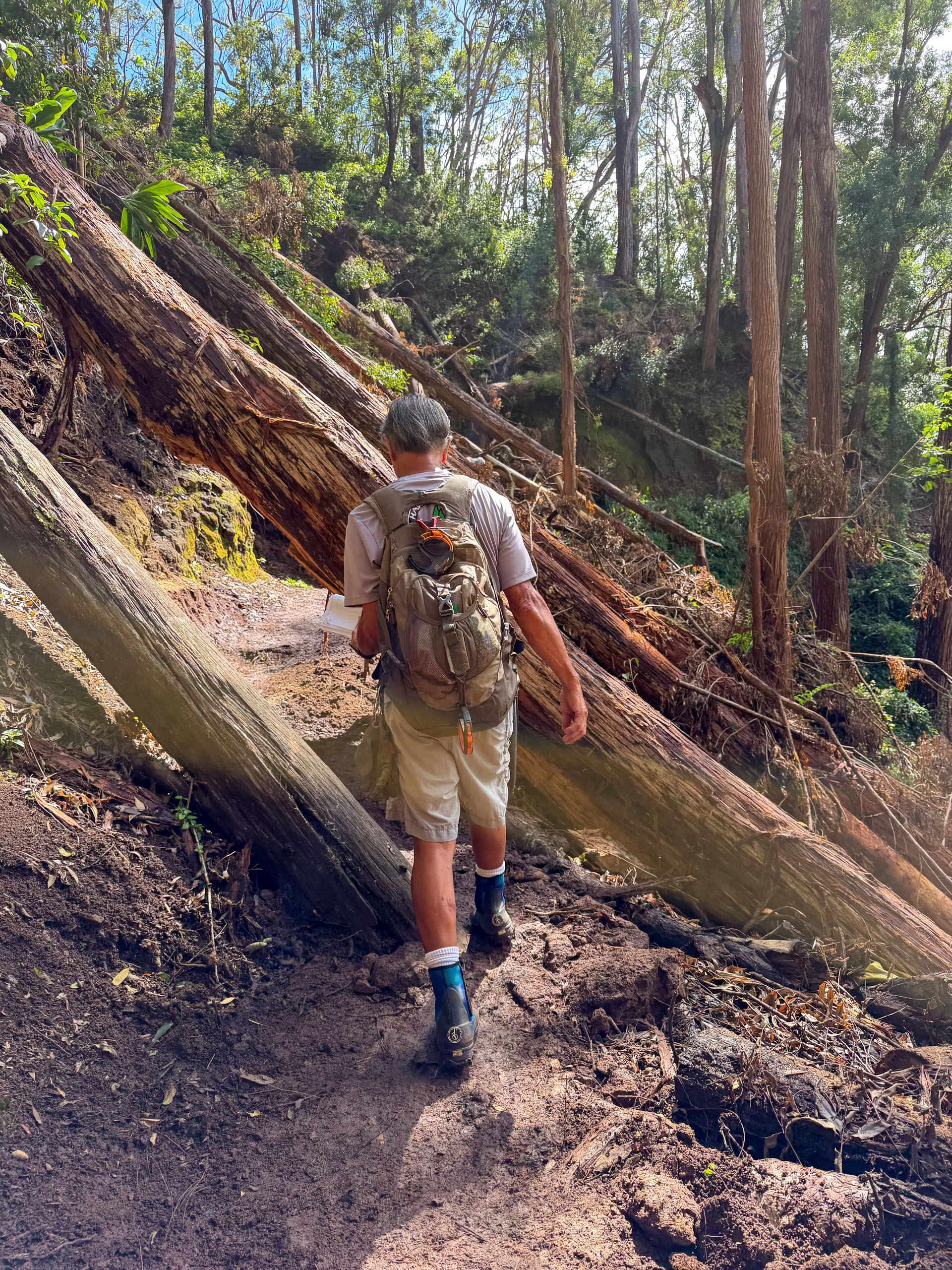
Kenji introduced us to a wide variety of plants along the trail, explaining their origins, uses, and impacts on Hawai’i’s environment. Below are some of the plants Kenji highlighted along with detailed and often fascinating information he shared with us along our walk.
Native Trees & Plants
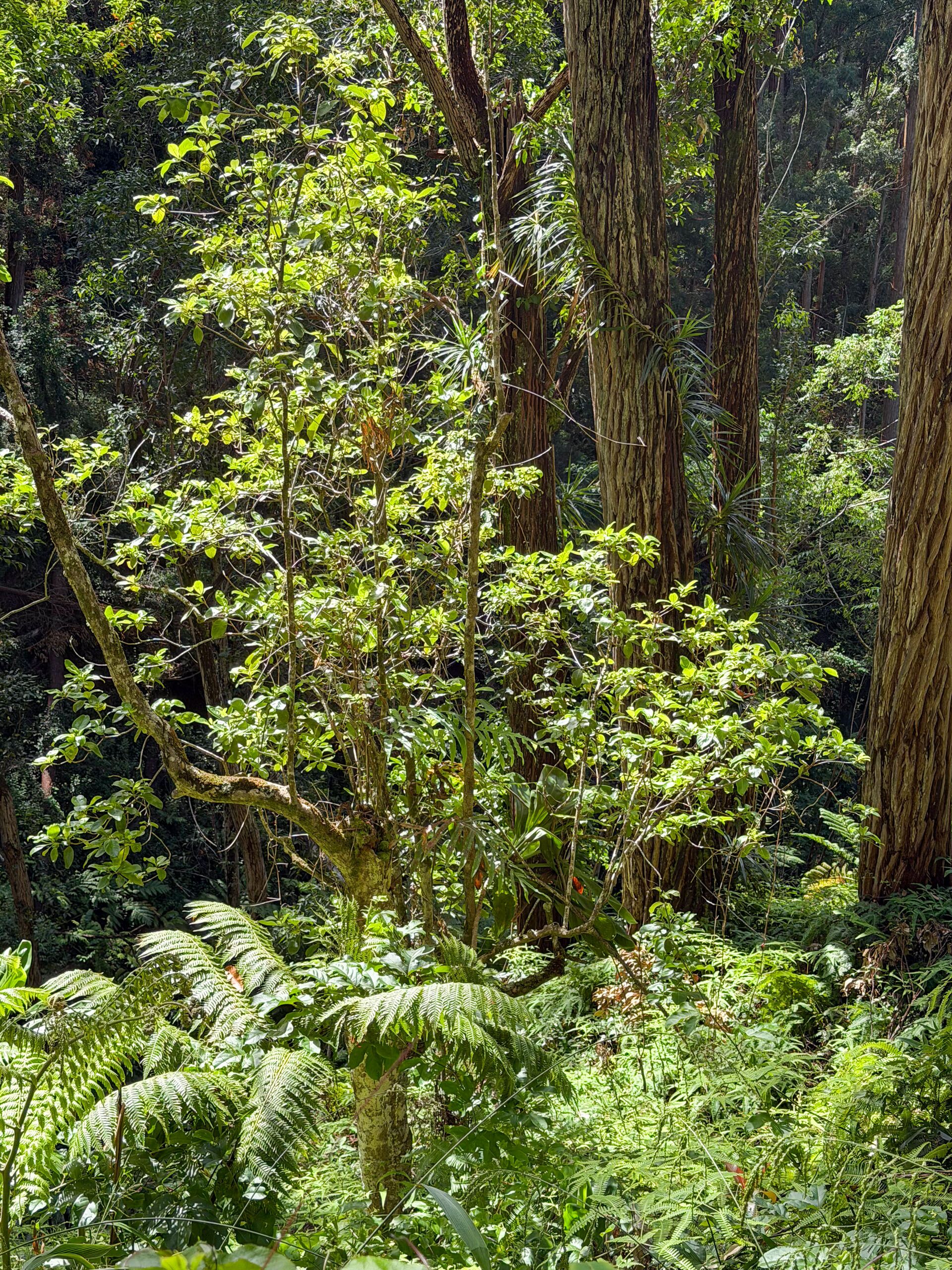
- Ahakea – A Hawaiian tree prized for its pale, yellowish wood. Kenji explained that it was traditionally used for items such as poi boards and canoe components, including gunwales.
- ‘Alahe’e – A native Hawaiian tree whose name evokes a fragrance that slips through the forest.
- Hapu’u – An endemic Hawaiian tree fern. Its distinctive leaf features help distinguish it from the horribly invasive mulesfoot fern.
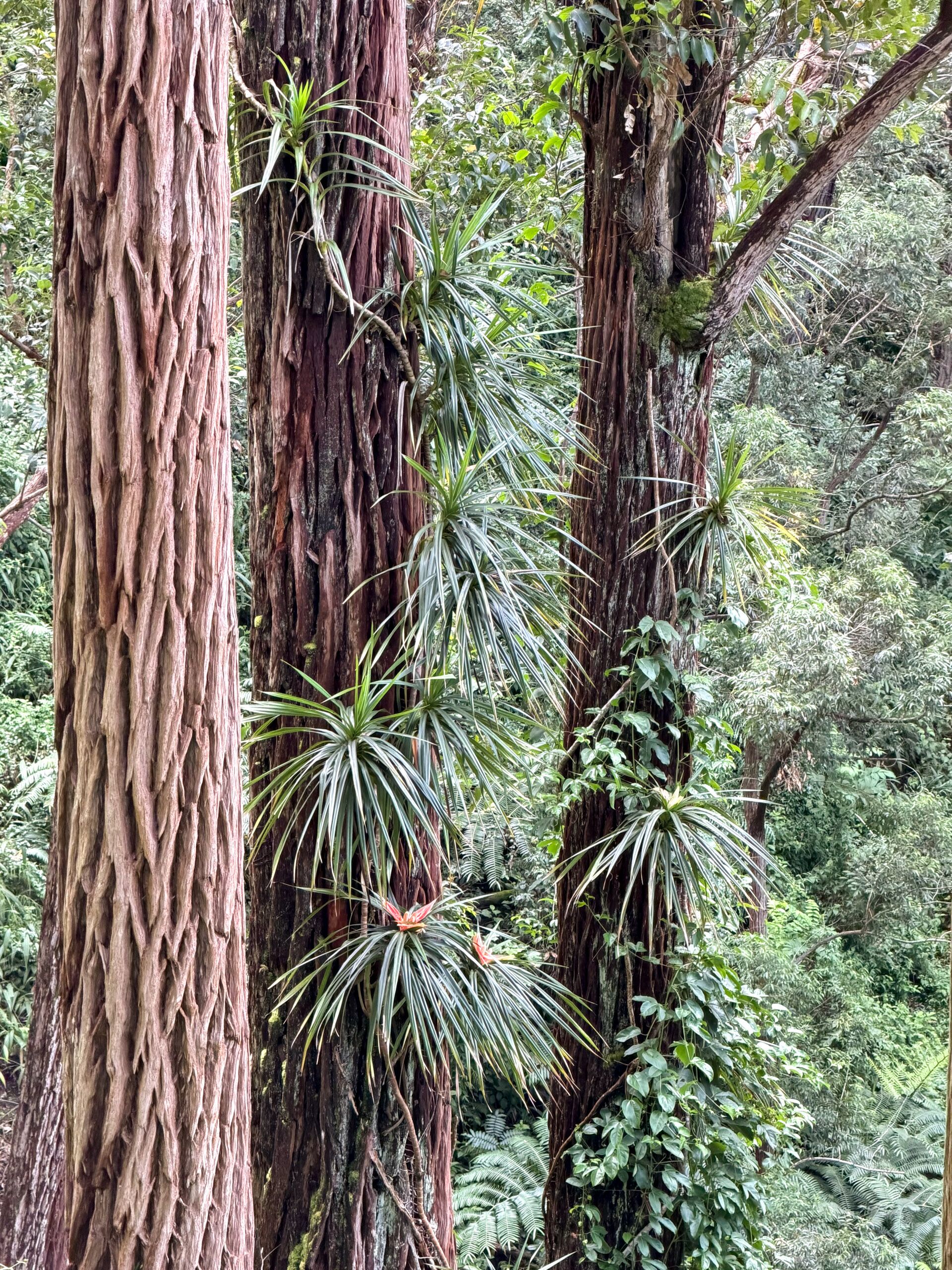
- ‘Ie’ie – An indigenous Hawaiian climbing plant with remarkably strong roots. These were traditionally used in basketry and in the construction of the framework of mahiole, or Hawaiian feather helmets.
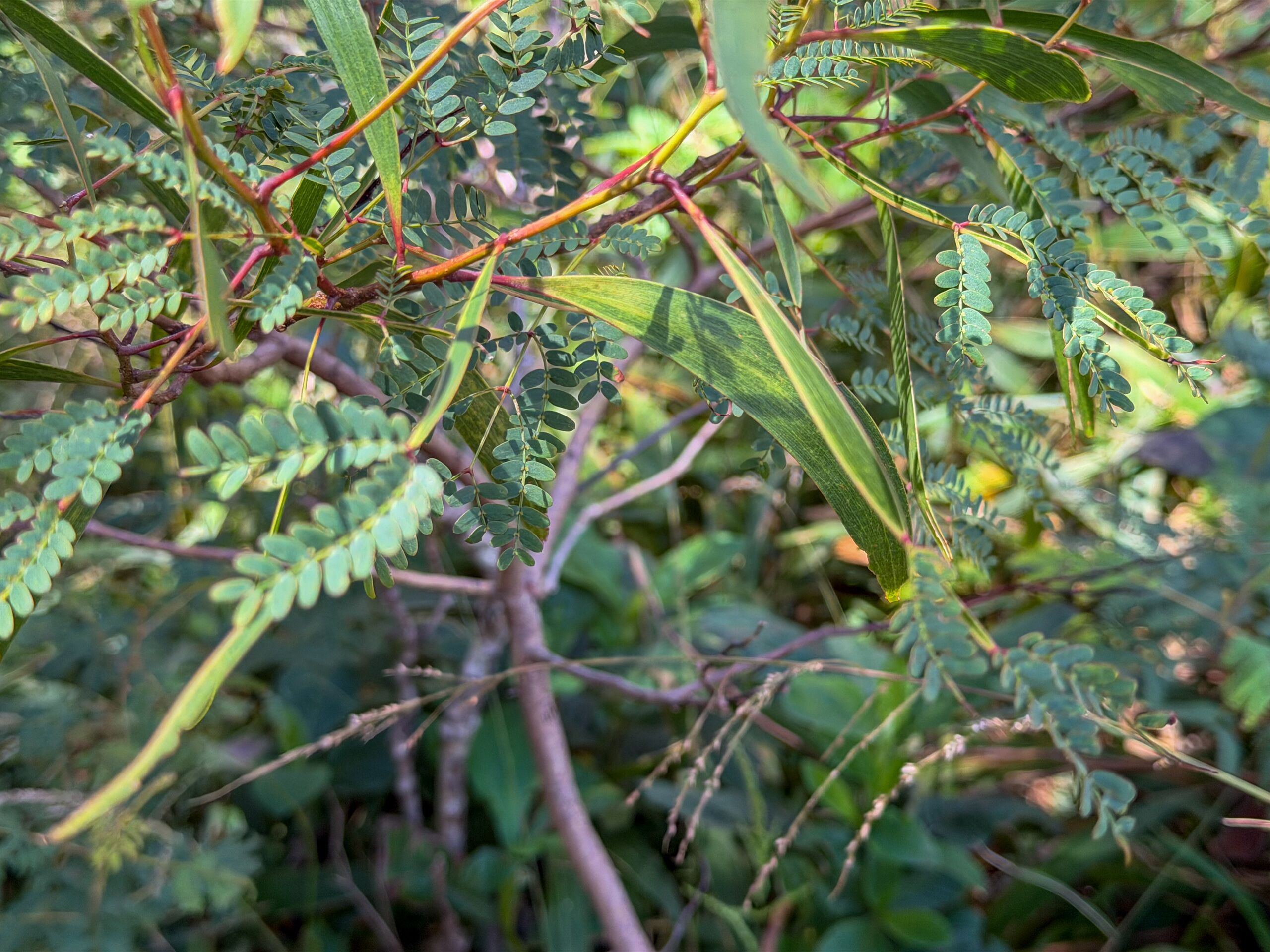
- Koa – A beloved Hawaiian tree with an unusual feature: what may look like leaves on mature trees are often flattened leaf stalks called phyllodes. These take over the job of photosynthesis as the tree matures.
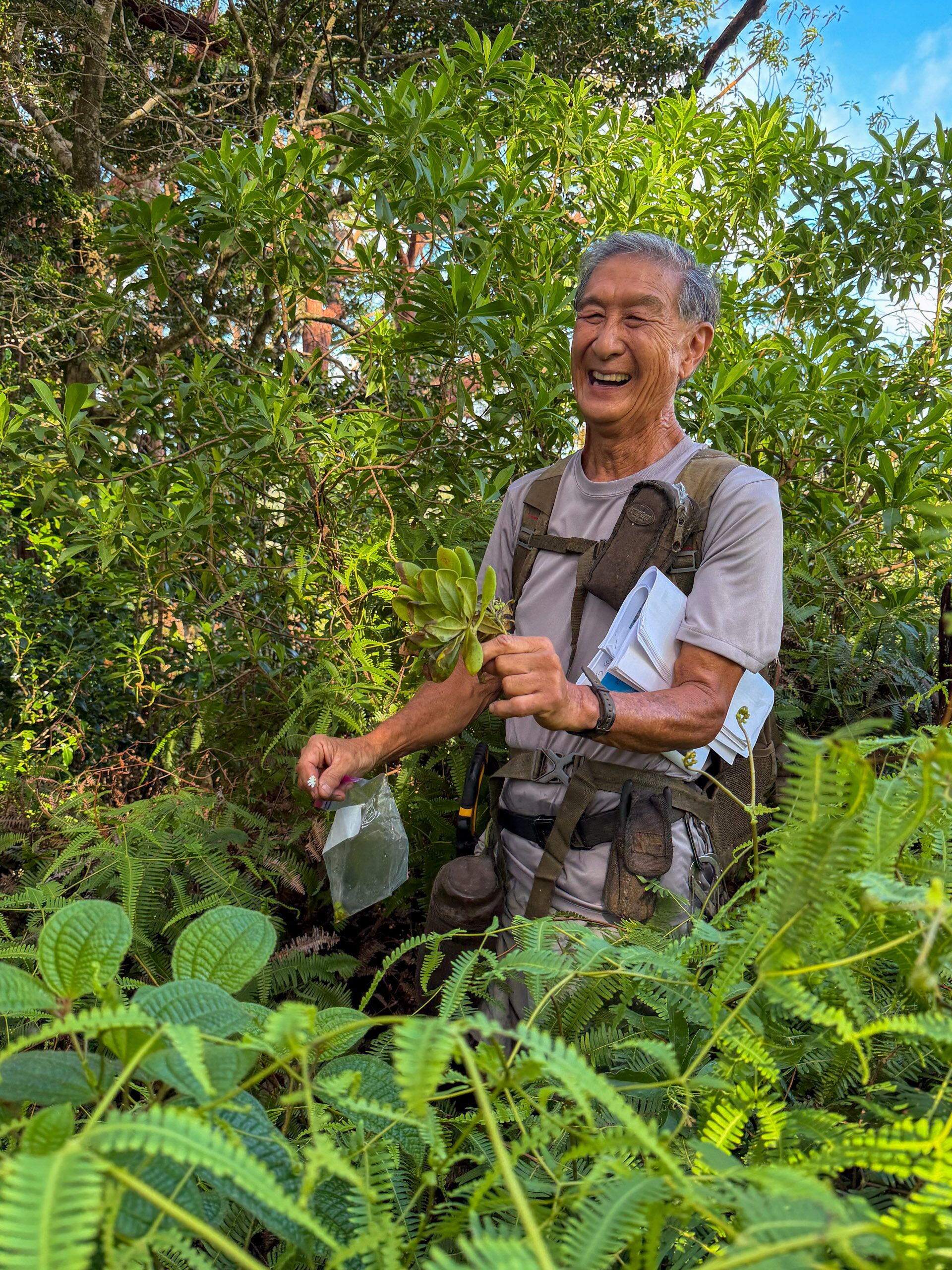
- Naupaka – Kenji shared the well-known Hawaiian legend of two lovers, often described as a beach girl and a mountain boy, who were separated. Their story is reflected in the two forms of naupaka: one found along the coast and the other in the mountains. The coastal species is native to Hawai?i and also occurs elsewhere, while the mountain species is endemic to the Hawaiian Islands.
- Ohi’a lehua – One of Hawai’i’s most important native trees, providing essential habitat for native forest birds and other wildlife.
- Pukiawe – Indigenous shrub that the ali’i (nobility) used to allow them to meet and mingle with commoners by being exposed to the smoke from this wood.
- Sandalwood – Kenji explained that the sandalwood we saw along this trail had all been planted.
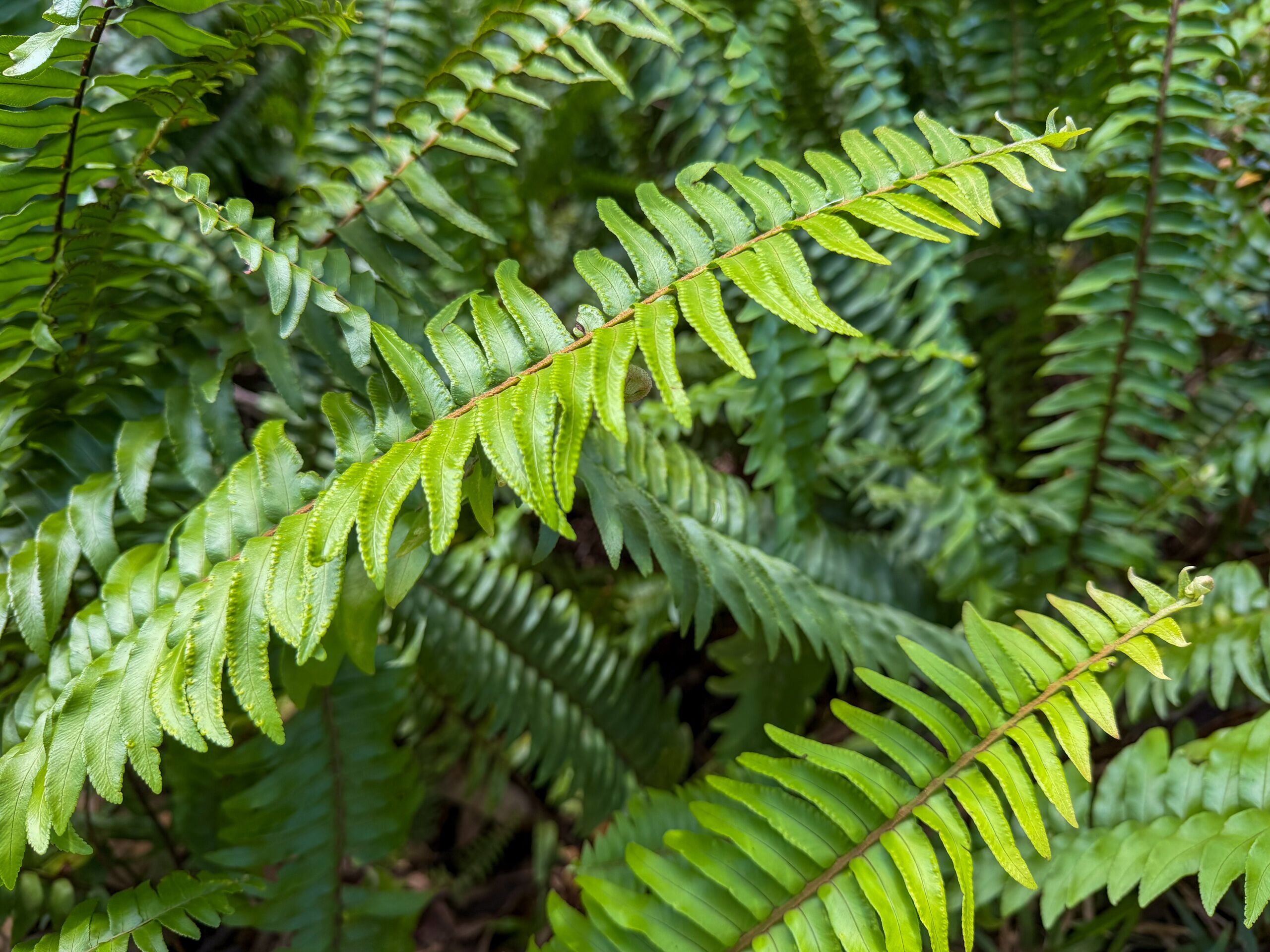
- Sword ferns – We also learned to recognize native ferns growing along the trail – for example, if you turn these ferns over and they are not hairy, they are native.
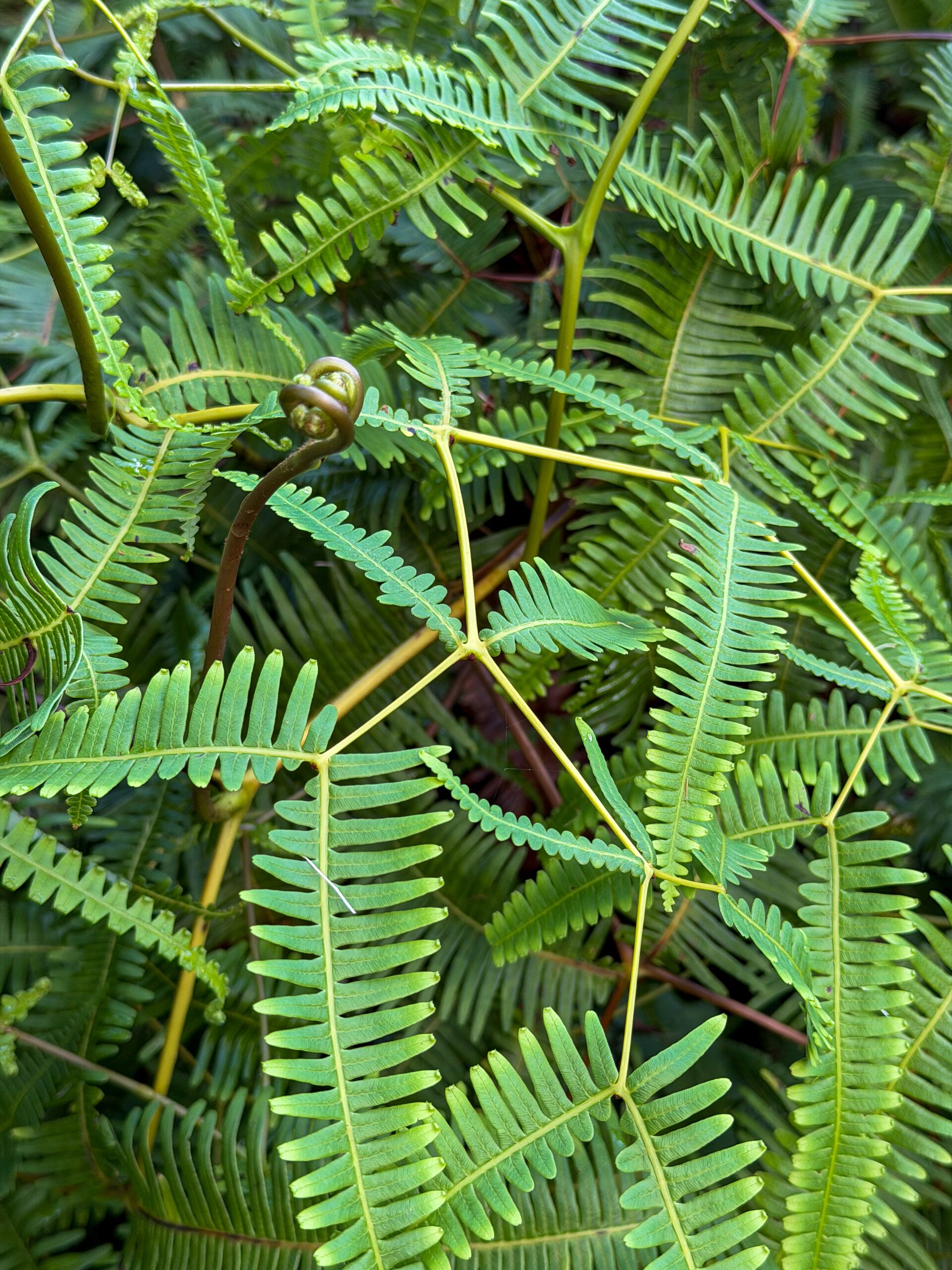
- Uluhe – A native Hawaiian fern that can form extensive ground cover in the forest. Kenji emphasized its importance in for the forest floor, helping limit opportunities for invasive plants to become established.
Invasive Trees & Plants
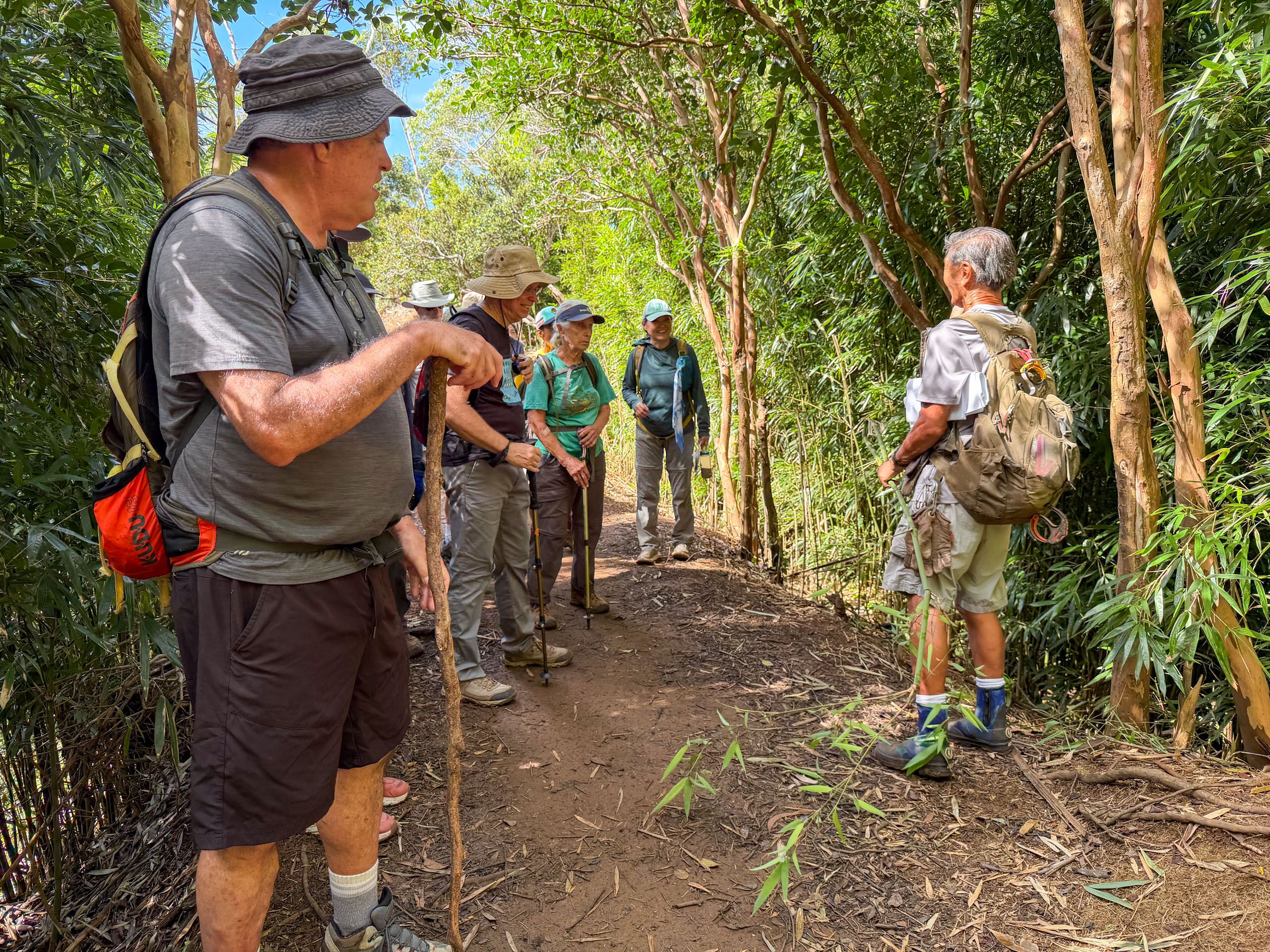
- Black Bamboo – Although bamboo looks like a tree, it is actually a grass. Kenji explained that the black bamboo growing in Hawai’i is highly invasive, while the clumping varieties brought by Hawaiians grow in a much more contained manner. He also shared the remarkable story of bamboo flowering: some species flower only once in a hundred years, and flowering can be followed by widespread dieback before new growth emerges.
- Clidemia (Koster’s curse) – An invasive shrub that can form dense growth and displace native plants. Unfortunately Koster happened to get the credit for spreading this plant, when in fact he was merely at fault for being the neighbor of the actual culprit.
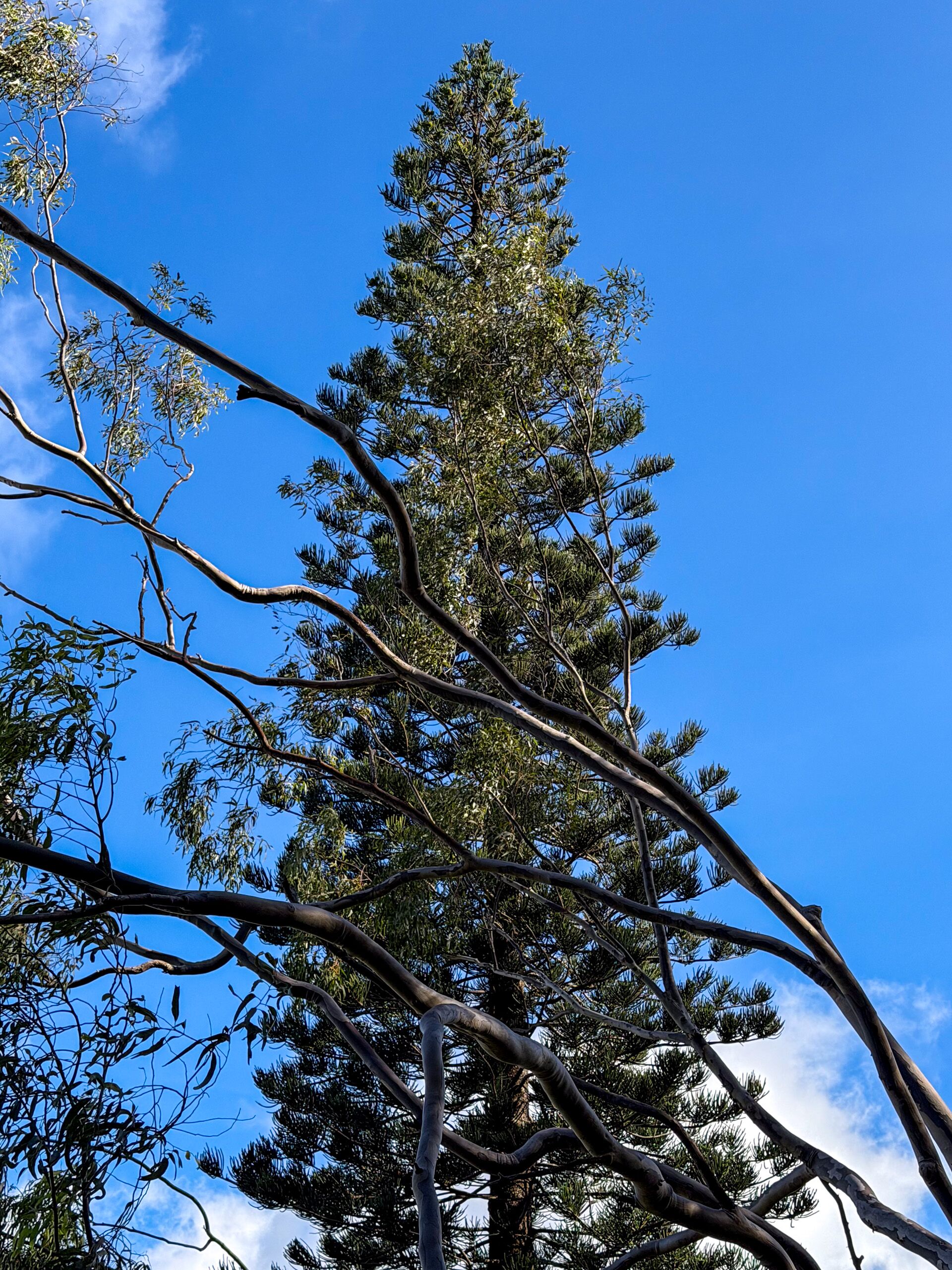
- Cook Pine – More common in Hawaii than the Norfolk pine, it has more densely packed branches and their trunks have a slight lean. HTMC member Tom McGuire, who is also known for reestablishing an ancient Hawaiian trail, renamed as the Tom-Tom trail, also spent time in this area and planted a large grove of cook pines.
- Gunpowder tree – Kenji shared how its wood was traditionally burned to produce charcoal used in making gunpowder.
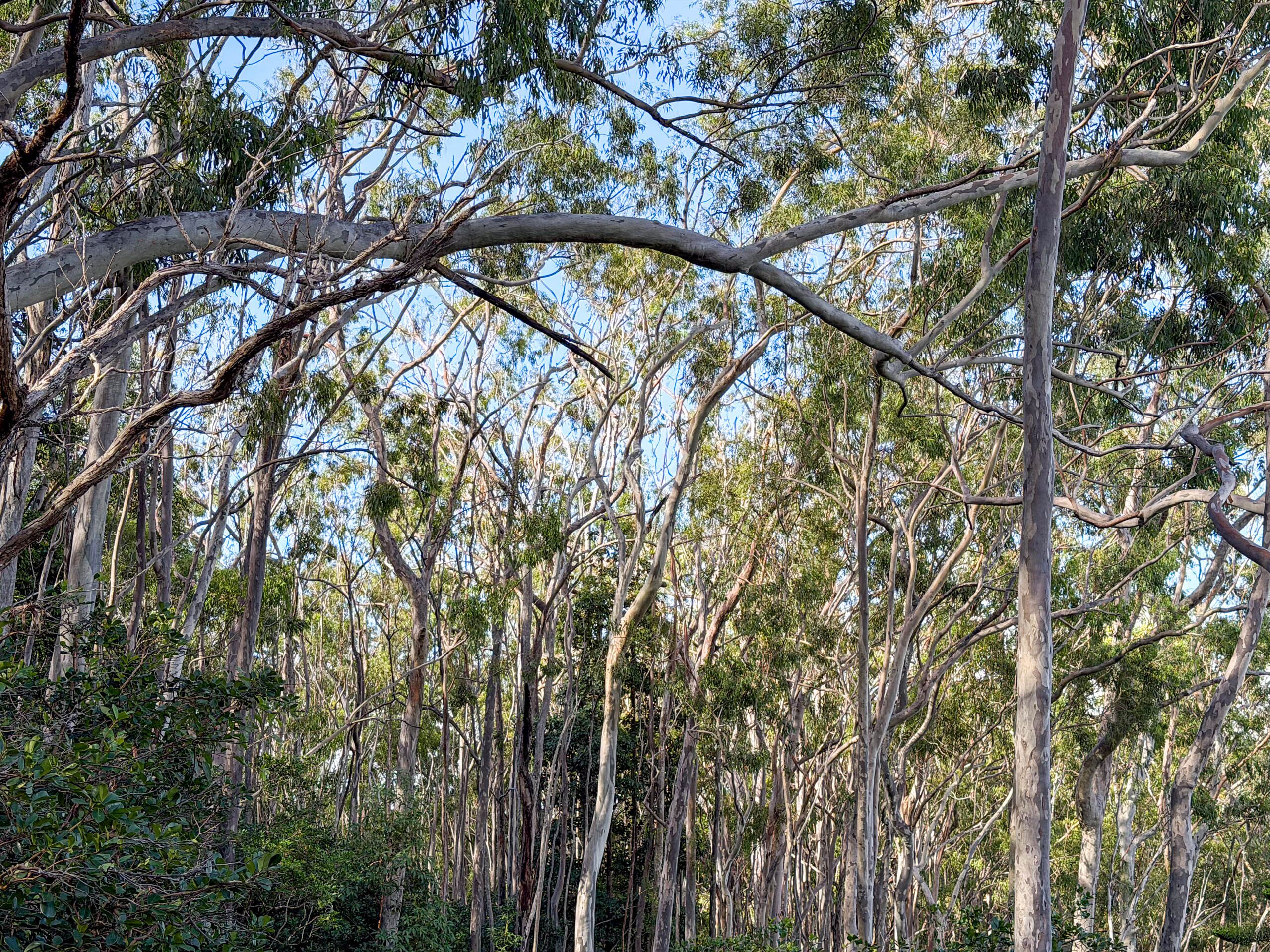
- Lemon eucalyptus – An introduced tree known for its fragrant leaves, which contain aromatic citronella oil, which helps keep mosquitoes away.
- Lilikoi (Passion fruit) – Kenji explained the origin of the name “lilikoi,” which came from a Gulch on Maui where it was planted and that the Passion flowers have been associated with Christ and the Stations of the Cross.
- Mules’s Foot Fern – Introduced to Hawai’i by Lyon Arboretum in 1927, has spread quickly. You can tell the difference between it and the native hapu’u fern because unlike the serrated edges of the hapu’u, the edges of mules foot fern is smooth.
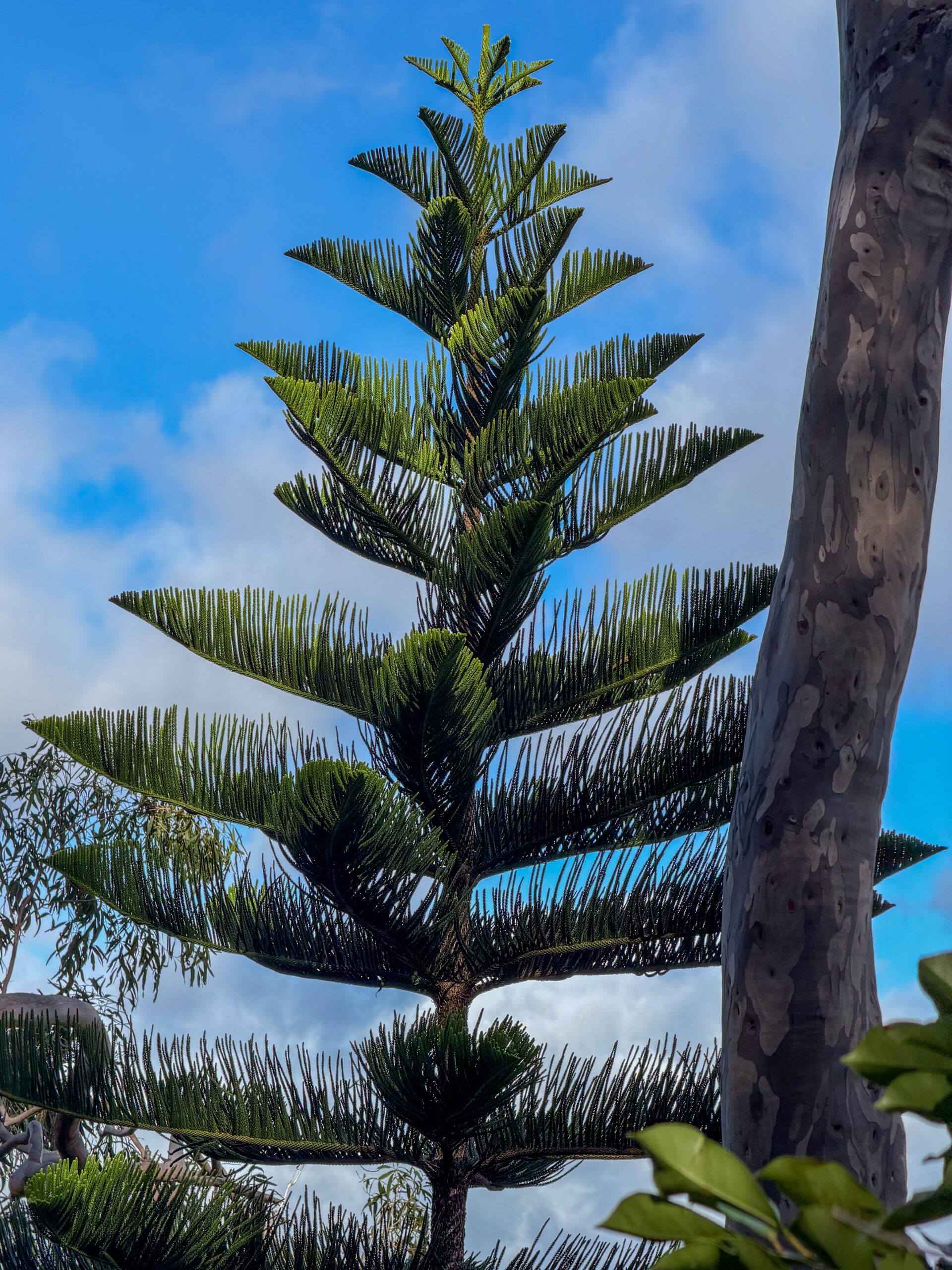
- Norfolk Pine – are closely related and similar to the cook pine but not as common as cook’s in Hawai’i. Straighter trunk and has more distance between their branches.
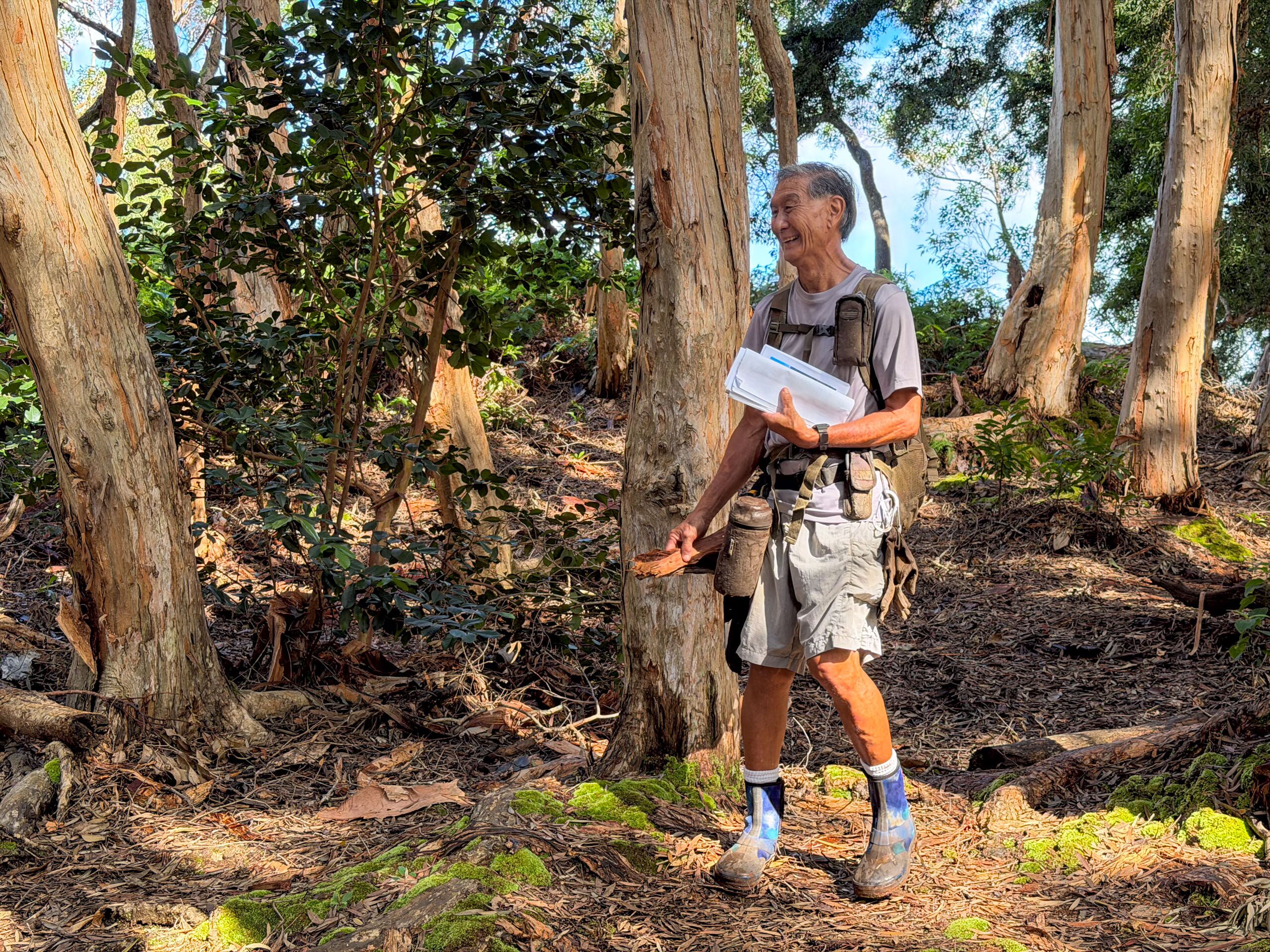
- Paperbark – Originally from Australia, this tree has distinctive layers of papery bark that protect its trunk. Kenji described how little grows beneath it, pointing out its negative effects on its surroundings and why these trees have been ringed (to kill them) in other areas.
- Shoebutton Ardisia – grown for its attractive flowers and leaves , it spreads to form a dense monoculture in the area and is one of our most common invasive species today.
- Strawberry guava – An aggressive invasive species that can spread through native forests and crowd out native vegetation. Tectococcus ovatus was introduced to feed on young strawberry guava leaves, forming galls that weaken the trees, slow canopy growth, and reduce fruit and seed production.
- Swamp mahogany – Another introduced tree in the Eucalyptus family that we encountered along the trail which is distinct due to its dark spongy bark that grows incredibly tall.
- Vervain (Owi) – introduced plant has become a terrible weed but you can enjoy its edible purple flowers that taste like mushrooms!
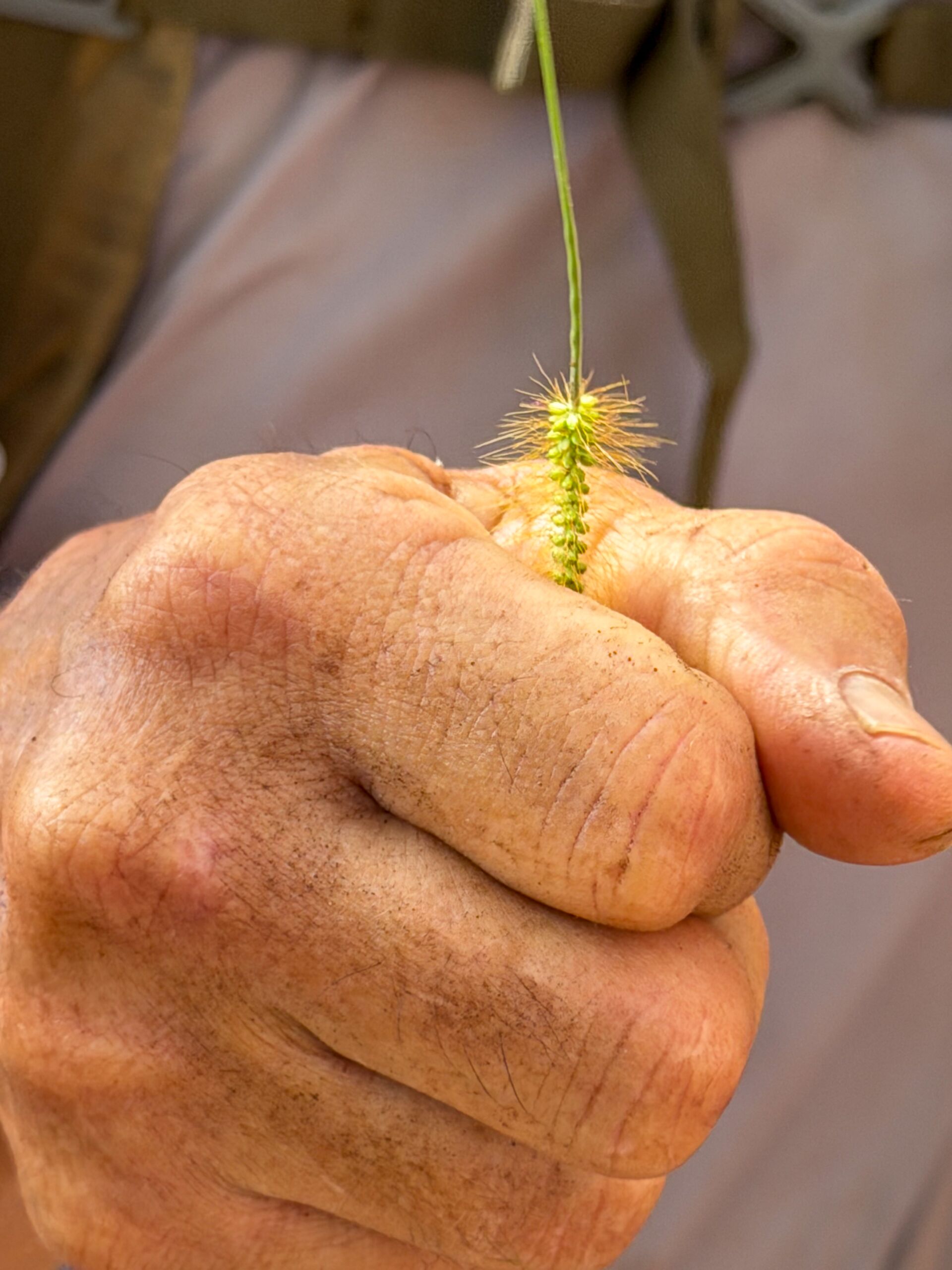
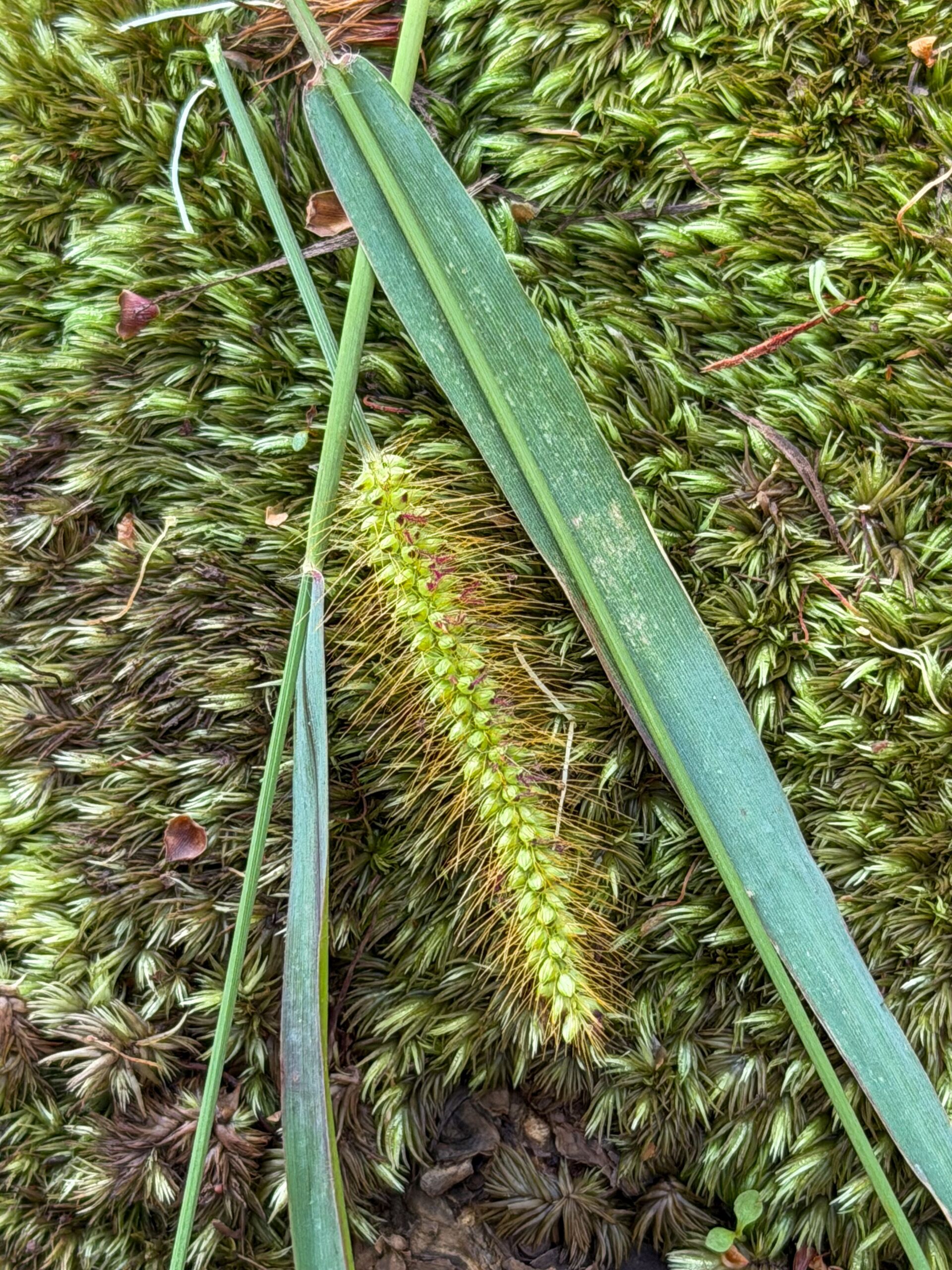
One of the most memorable moments came when Kenji introduced us to the caterpillar grass (Harpochloa falx). He showed us that if you pick the top of the grass stalk and place it in the palm of your hand, it appears to move as you open and close your fist. Naturally, we all had to try it! The sensation was a little creepy, but absolutely mesmerizing.
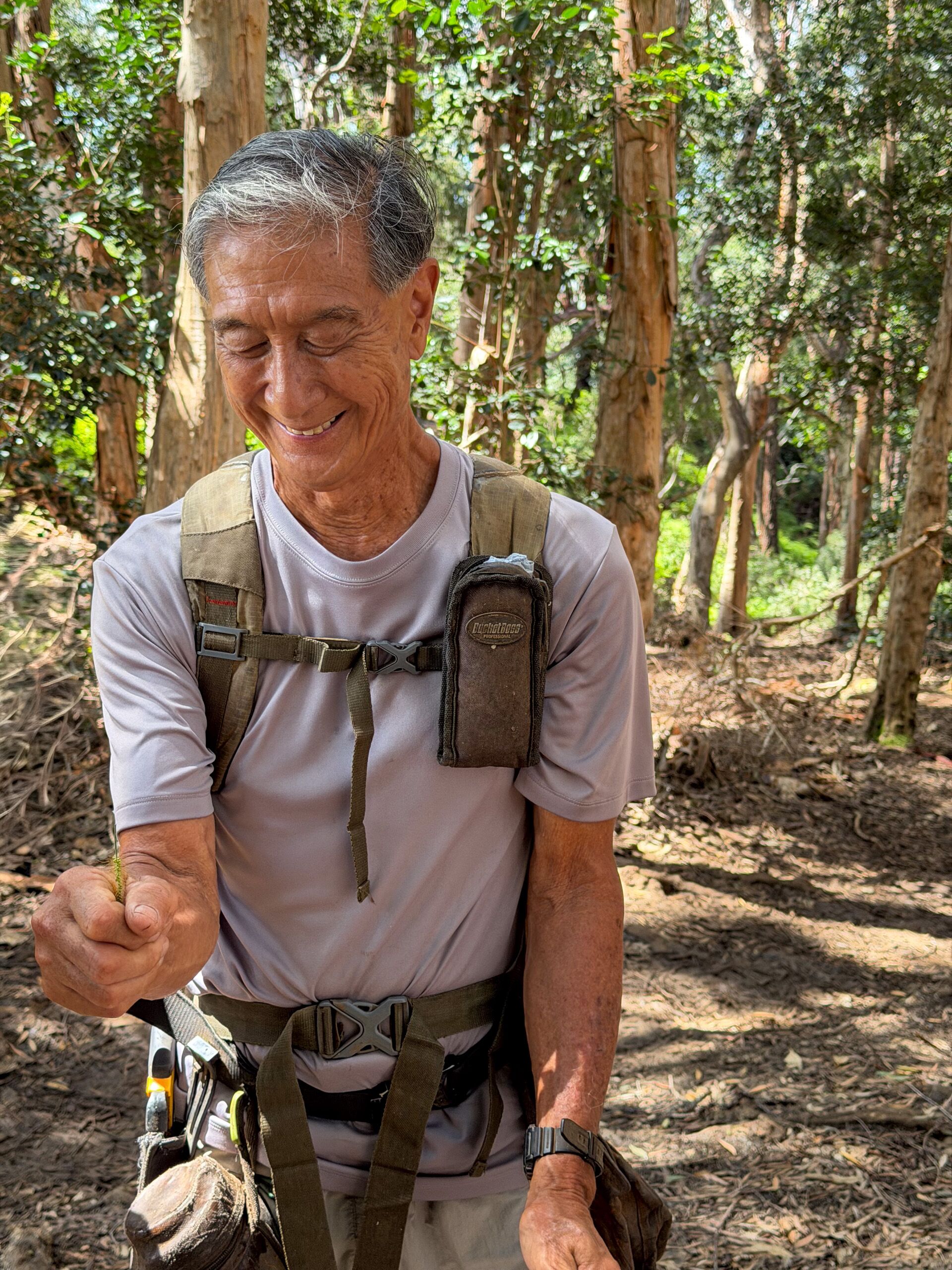
Mahalo to Kenji for sharing his extensive knowledge, preparing such a valuable resource, and dedicating his time to caring for this special place. His enthusiasm deepened our appreciation for Hawai’i’s remarkable plant life and reminded us that understanding our natural history is an important part of learning to care for the ‘aina we love.
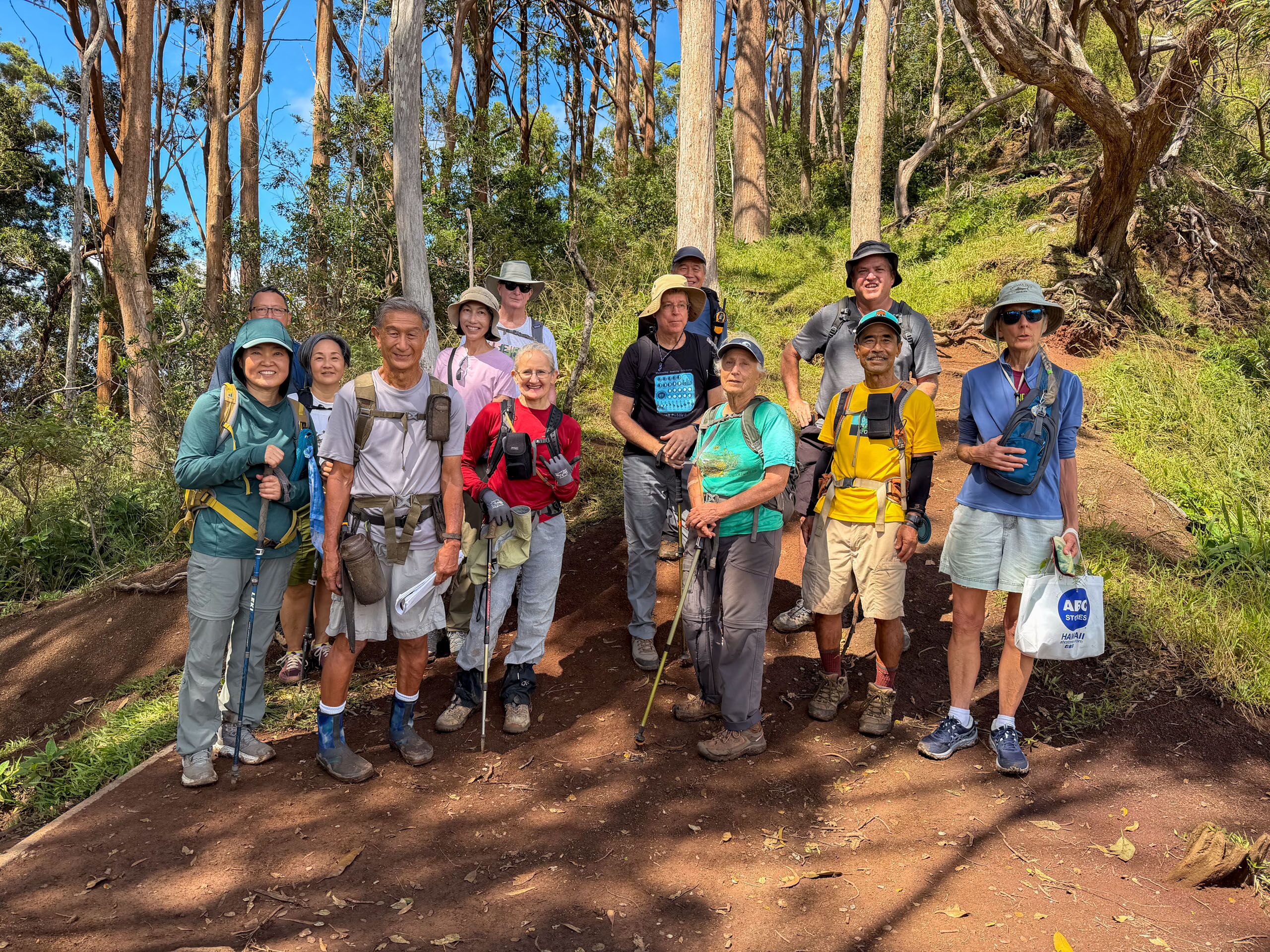
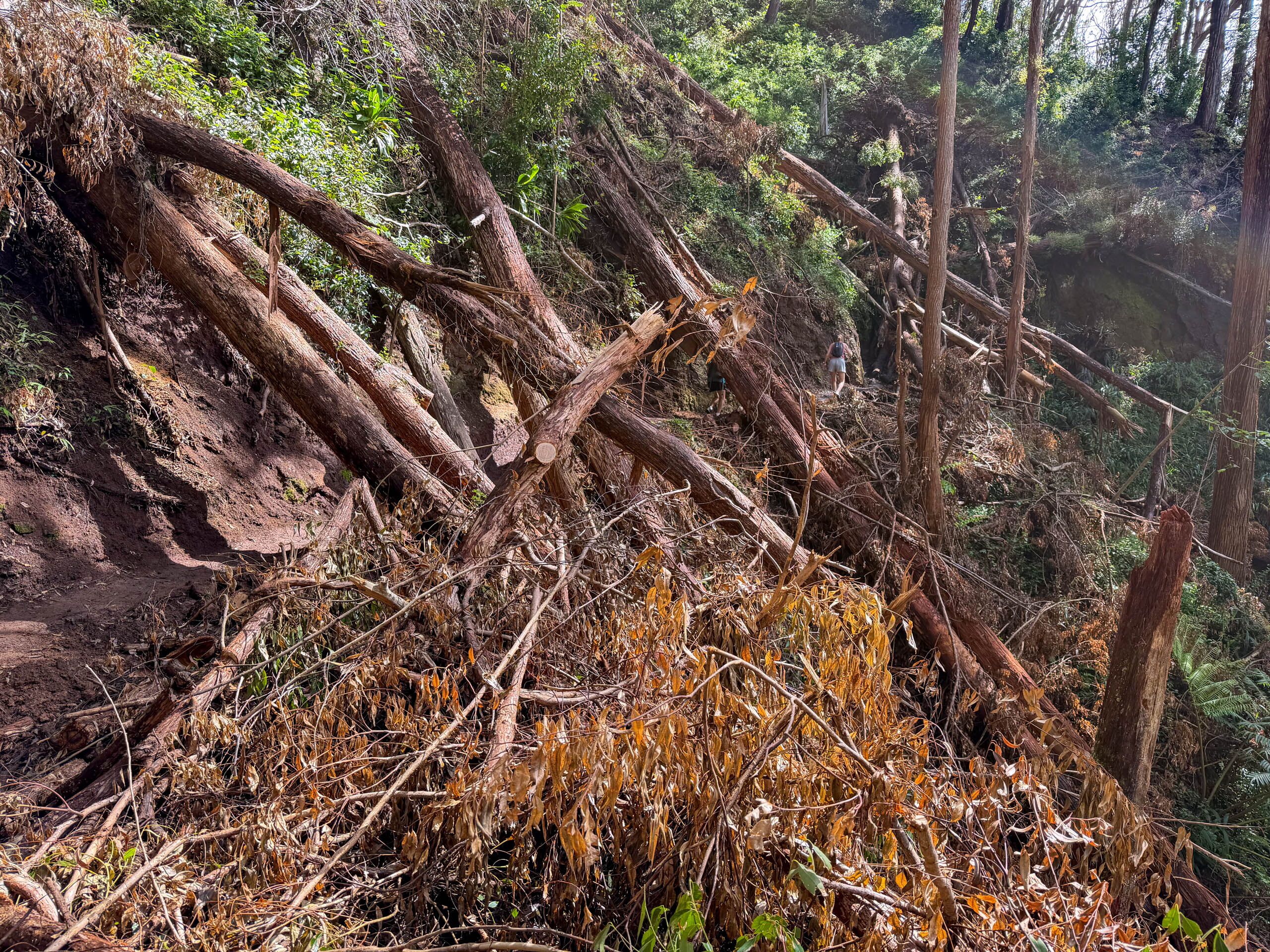
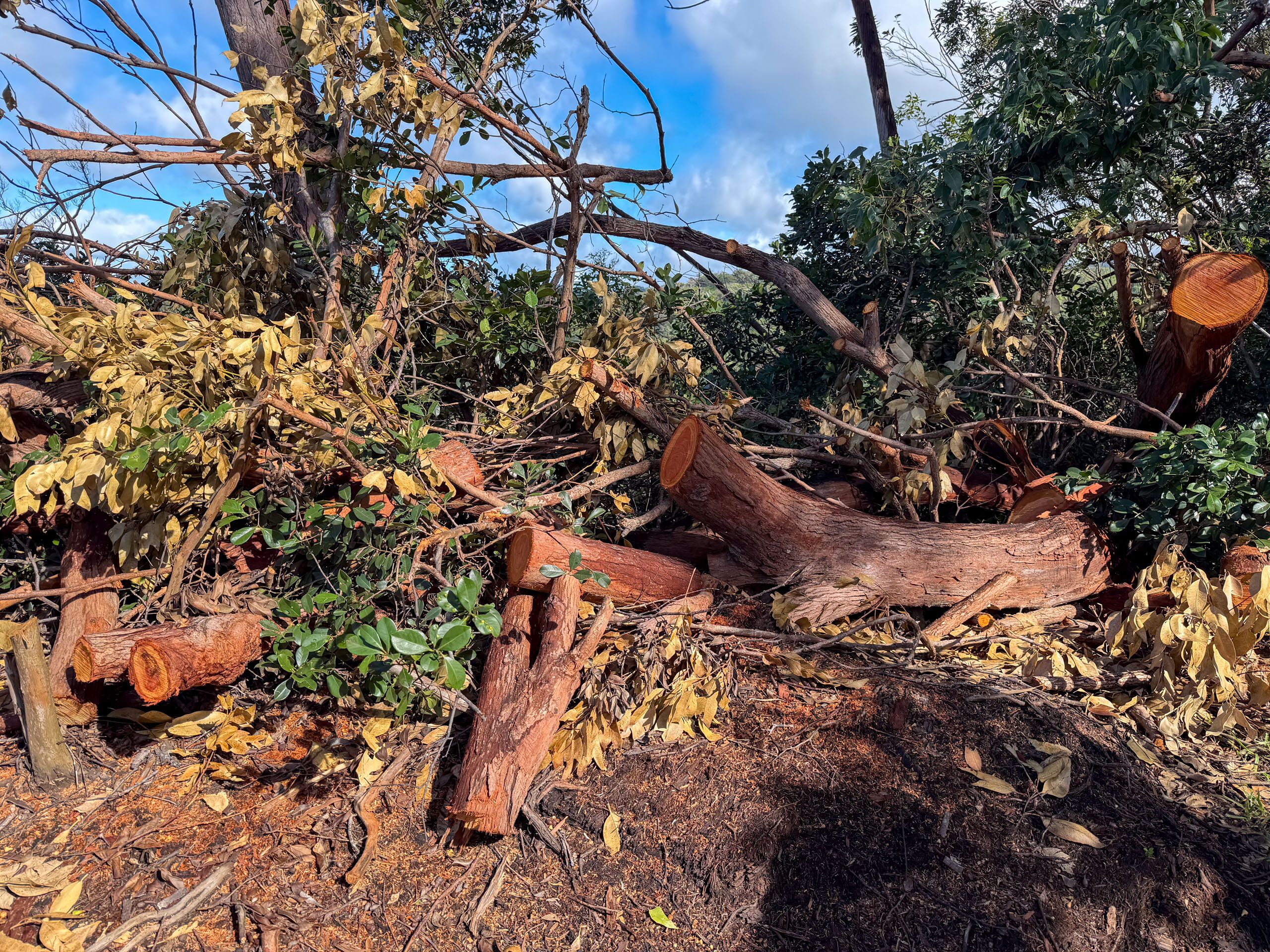
Among other things, Kenji has been a dedicated steward of the ‘Aiea Loop Trail for years. He and June Miyasato volunteer hours of their time each week to helping maintain this trail for everyone to enjoy. Unfortunately 2026 has been a bad year for the trail due to all the damage from multiple storms so along with landslides and erosion, every week more trees have fallen, making the clean up process endless!
If you missed this plant walk with Kenji, keep your eye on the hike schedule, as he leads a few special plant hikes for HTMC every year.