
What Do We Owe the Plant? Mamaki and the Ethics of Medicinal Plant Commerce
A warm day coming to the end of Welo, in the ancient Hawaiian practice, the final shift between Ho’oilo (wet season) and Kau (dry season), found the Waikiki market flooded with bottled teas and beverages promising health and well-being. The advertisements did their job well, pulling individuals from all walks of life, myself included. I opened the fridge door and was at once drawn to a 16oz can labeled “Hawaiian Mamaki Iced Tea” by Nakihalani Farm, having read about the plant’s medicinal nature somewhere before. So, as a product of the consumerism built into my environment, I bought the can. This might seem like a harmless action since I only wanted something to cool me down on a sweltering day. But as mamaki, an endemic plant central to La’au Lapa’au practice, moves from the environment to the national retail chains, even through companies like Nakihalani Farm focused on stewardship of Hawaiian heritage, its rapid commercialization begins to highlight the issues in ecological stewardship and economic extraction. A deep ecology framework, which insists that plants and land hold intrinsic value independent of profit, truly offers the best lens for evaluating whether mamaki’s commercial boom, even when intentions mean well, is compatible with the Hawaiian principle that “the land is the ali’i and we serve the land.”
This paper argues that mamaki’s journey from the misty mountains of Hawai’i nei to the grocery store shelf is not simply a success story of an indigenous plant going mainstream. It is a real test of whether commercialization can coexist with a deep ecology worldview where land and plant posses worth independent of what they yield to human gain. To make this case, I first want to establish what mamaki is, botanically and culturally. Incorporating deep ecology as the primary theoretical framework and examining both its usefulness and its limitations when applied to an indigenous Hawaiian context. From there, I will also touch on how the issue is currently being addressed comparing a mission-driven nonprofit, local growers, and the for-profit companies like Shaka Tea, which was acquired by the much larger King’s Hawaiian corporation in 2022. Finally, I challenge some preconceptions this research made clear, and consider what more could be done by companies, policymakers, and consumers like myself.
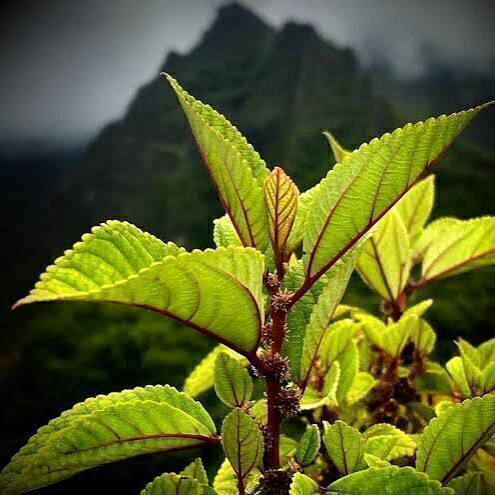
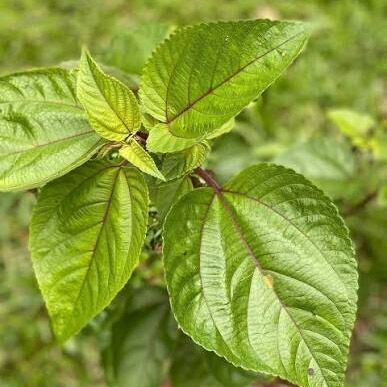
Mamaki (Pipyurus albidus) is a flowering shrub or small tree endemic to the Hawaiian Islands, meaning it occurs naturally nowhere else on Earth. A member of the nettle family, it grows in native forests at around roughly 1,500 and 4,000 feet and is found on every main Hawaiian Island except Ni’ihau and Kaho’olawe (Hawai’I Division of Forestry and Wildlife, n.d.). Ecologically, mamaki is more than a single species in isolation, it is a host plant of the endangered Kamehameha butterfly, or pulelehua, Hawai’i’s official state insect, whose caterpillars feed exclusively on mamaki leaves (Heaton, 2022). The plant’s presence or absence in a given forest is tied directly to the survival of a species found nowhere else in the world.
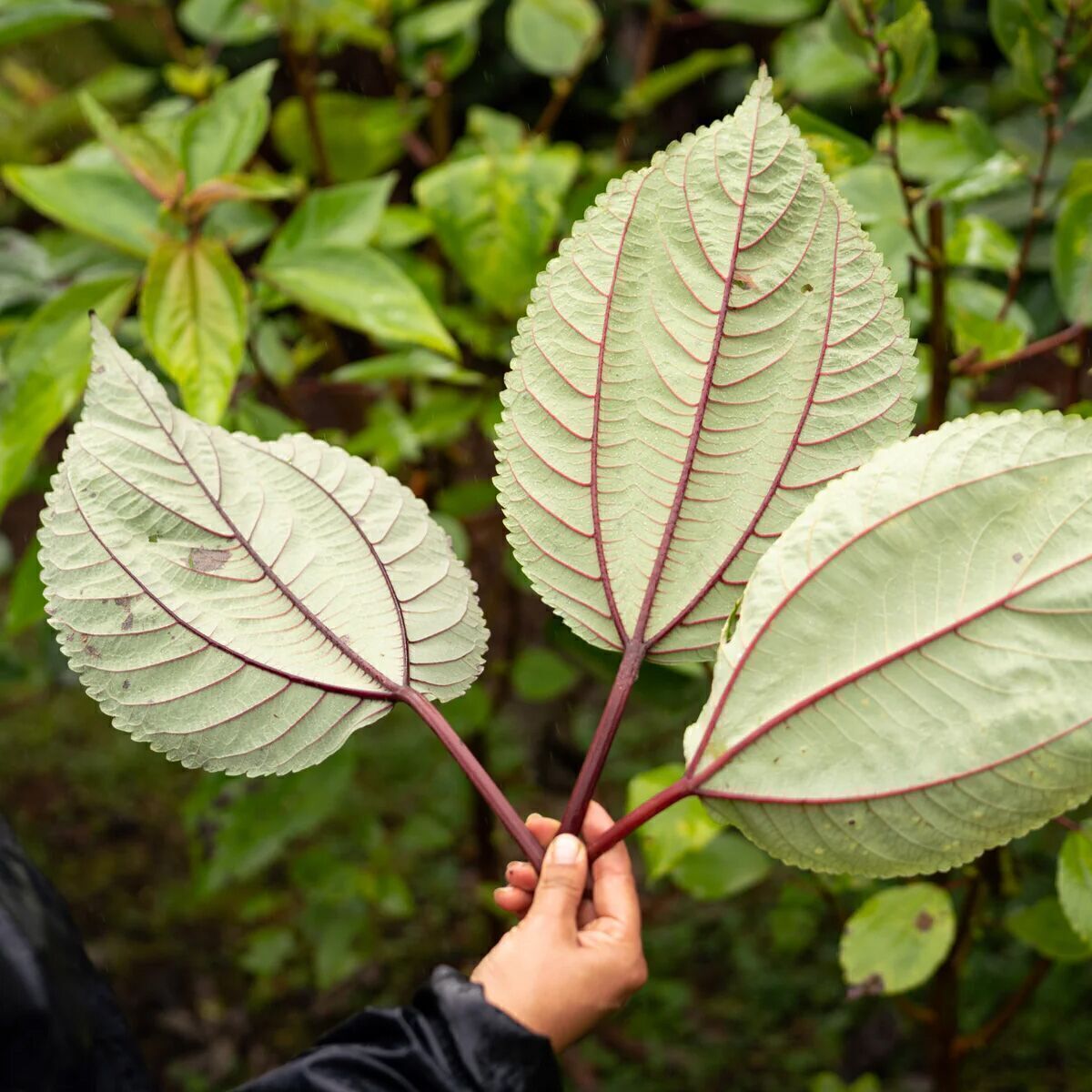
Culturally, mamaki serves a huge purpose in La’au Lapa’au the traditional Hawaiian system of healing through plants. According to ethnobotanist Katie Kamelamela, who works with Akaka Foundation for Tropical Forests, mamaki was historically valuable to the Kanaka Maoli, Hawai’i’s first settlers, for far more than tea. The Inner bark was beaten and combined with sap to create kapa, a traditional clothe, and its black, seed-flecked fruit served medicinal purposes, including the healing of sores and use of a mild laxative (Heaton, 2022). Kamelamela would describe the plant’s historical significance as tied to “clothing, warmth, and foundation” for quality of life, not merely a beverage ingredient (qtd. In Heaton, 2022). This history is important simply because it can allow us to think differently about the companies extracting traditional medicine from indigenous communities, and when mamaki appears on a grocery shelf labeled simply as a wellness trend, the bottle does not communicate the plant’s innate role in Hawaiian material culture, medicine, and spiritual practice.
This paper comes directly from deep ecology frameworks, where the environmental philosophy was developed by Norwegian philosopher Arne Naess and later on, George Sessions. Naess distinguished deep ecology from what he called shallow ecology, which seeks to reduce pollution or manage resources without challenging human dominance over nature. Deep ecology instead asks people to abandon an anthropocentric view of the world. The eight-point platform Naess and Sessions came up with in 1984 opens with the claim that the well-being and flourishing of human and nonhuman life on Earth have value in themselves independent of the usefulness of the nonhuman world for human purposes, and goes on to argue that richness and diversity of life are themselves values, that humans have no right to reduce that richness except to meet essential needs, and that present human interference with the nonhuman world is excessive and worsening (Naess and Sessions, qtd. in Devall and Sessions, 1985). Applied to mamaki this framework allows us to ask not only what the plant is worth to us, but what we owe to it. Truly a question that a purely economic or even a conventional conservation framework, focused on yield and sustainable harvest rates, tends to skip.
Deep ecology is useful here because it refuses to let the true worth of a plant to be traded away for good intentions. A company can source Mamaki sustainably, pay farmers fairly, and still treat the plant as a resource whose ultimate purpose is to generate profit, but deep ecology states that this framing brings up a lot of issues. The plants intrinsic value as host to the pulelehua butterfly, as kapa fiber, as medicine, and simply as a living thing in a native forest does not depend on whether anyone profits from it. This framework unfortunately has limits when applied to an indigenous Hawaiian context, and I want to be honest about it rather than treat deep ecology as a perfect fit. First, deep ecology came about from a mostly Western idea, concerned with the relationship between human self and an abstract “nature.” Native Hawaiian epistemology does not separate plant, place, people, and practice into their own ideas the way that deep ecology’s language of intrinsic value can imply. Mamaki’s worth is relational and genealogical, tied into many mo’olelo, and reciprocal obligation, not simply an inherent property the plant possesses. Also, deep ecology has been criticized, including environmental justice scholars, for being indifferent to questions of who gets to decide how nature is protected, which can push indigenous communities to the side over land and knowledge in favor of an abstract biocentrism managed by outside people. A framework that asks, “what do we owe the plant?” without also asking “who has the right to answer?” Risks repeating the very erasure it claims to resist. Used carefully, alongside attention to indigenous sovereignty and cultural practices, deep ecology remains the clearest lens for the question a hand. It can not be a substitute for centering Kanaka Maoli voices like Kamelemela’s and Chun’s on what right relationship to mamaki actually needs.
Currently we see three different kinds of people playing a part in mamaki’s commercial trend, and they showcase the space between economic extraction and ecological stewardship. On the nonprofit side, United Plant Savers (UpS) offers a useful, if distant, model. It was founded in 1994 by herbalist Rosemary Cladstar after she found one of the last large wild placements of goldenseal in Appalachian Ohio. UpS is a 501(C)(3) organization built around the recognition that the 1990’s boom in herbal medicine was placing unsustainable commercial pressure on wild plant populations with no formal protection. UpS maintain a research-backed “at-risk” species list, manages a 370 -acre botanical sanctuary, and coordinate a Botanical Sanctuary Network of more than three-hundred-member sites where landowners commit to restoring habitat for native medicinal plants. Crucially, UpS frames its mission around protecting reciprocity and biocultural diversity. While UpS direct focus is North American herbs rather than mamaki specifically, its model building places, educating people, and treating a plant’s right to exist as separate from its market demand is exactly the kind of structure a deep ecology approach to mamaki would want to see replicated in Hawai’i.
On the profit side, Shaka Tea is the most visible mamaki brand. Co-founded in Hilo in 2016 by Bella Hughs and Harrison Rice, Shaka Tea built its identity around direct trade with more than twenty Big Island Farmers, paying premium prices for mamaki and giving away tens of thousands of seedings to small growers (Heaton, 2022; Tea & Coffee Trade Journal, 2022). The company’s own messaging frames mamaki cultivation as ecological restoration, where planting the perennial shrub. It argues that it helps to rebuild the native habitat while giving farmers a harvestable, high-value crop. In February 2022, King’s Hawaiian the much larger, family-owned maker of Hawaiian sweet bread, operation through its parent company Irresistible Foods Group, acquired Shaka Tea outright after first investing in a 2020 funding round (BevNET, 2022; Food Navigator-USA, 2022). Shaka grew up 404% between 2017 and 2019 and another 500% in 2021 alone, and by the time of the acquisition was sold in roughly 8,000 stores nationwide and in Japan, including 7-Eleven and Speedway location, with plans to reach 20,000 doors (Heaton, 2022). Shaka Tea’s leadership and Hilo headquarters stayed in place after the sale, and the brand continues to describe its missions in the language of sustainability and Hawaiian stewardship. The acquisition by a mainland-headquartered, multi-brand food market marks a real shift, a plant that was once harvested for kapa, medicine, and ceremony is now an item inside a corporate portfolio that also includes Boston-based Grillo’s Pickles.
Independent local growers occupy a third position, closer to the plant and often more openly conflicted about its commercial rise. Big Island farmer Matt Drayer, who manages roughly 8,000 mamaki trees on twenty-five acres using permaculture and Korean natural farming methods, supplies nearly his entire harvest to Shaka Tea, yet says plainly, “The fact that mamaki is getting popular is great, but for someone like me, it’s important to keep it from going extinct.” (Gtd. In Heaton, 2022). Roberta Taira, who grows mamaki at Punalu’u on O’ahu and hopes to build an educational hub for La’au Lapa’au frames her work in relational terms, “It’s ours, it’s the Hawaiian people’s and we’re responsible for this plant” (qtd. In Heaton, 2022). These growers are not simply people supplying our goods, many see themselves as the caretakers first, and their discomfort with the trends, even when it benefits them financially, it risks the extinction of knowledge.
Before this research I assumed that a plant’s commercialization was straightforwardly bad for it, where more demand would mean more wild harvesting, more habitat pressure, and eventually decline. There are other stories like this with things like American ginseng, which can take up to seven years to set seed and had been pushed towards scarcity by two centuries of over- harvest (United Plant Savers, n.d.) Mamaki complicates that assumption. Because it is a fast- maturing plant that can be harvested repeatedly once established and become farms like Drayer’s plant it as a companion crop that fixes nitrogen and restores degraded soil, commercial cultivation of mamaki can, in the right hands increase the total amount of habitat available for the Kamehameha butterfly rather than shrink. I had not expected commercialization to ever function as habitat restoration until seeing it partially in action.
For companies, Shaka Tea and similar brands could move beyond direct trade pricing towards formal benefit sharing agreement with La’au Lapa’au practitioners and Native Hawaiian organizations, ensuring that cultural knowledge used in marketing is credited and given to them, not just simply absorbed as a brand story. Packaging and marketing could change mamaki’s ecological role as host plant to the Kamehameha buttery and its medicinal history beyond tea, rather than reducing it to a flavor note. King’s Hawaiian, as the larger parent company, could publish independent sourcing audits and commit a fixed share of mamaki revenue to habitat restoration on the islands where the plant is grown, modeled on UpS’s sanctuary network.
For policymakers. Hawai’i’s Legislature and Department of Agriculture could give mamaki the same level of biosecurity attention they already devote to threats such as the avocado lace bug and coffee berry borer. That effort should also address mamaki’s own emerging pests, including the rust identified near Hilo and the ramie moth larvae found on Maui and Hawai’i Island, both of which threaten the leaves on which the export market and the Kamehameha butterfly depend (Heaton, 2022). In addition, state grant programs, such as the $55,000 USDA block grant awarded to the University of Hawai’i to study higher-yielding mamaki varieties, should be paired with funding for wild population monitoring so that efforts to improve yield do not come at the expense of wild genetic diversity. For consumers, myself included. The issue is rarely as simple as choosing whether to buy a product; more often, it is a question of which kinds of businesses consumers choose to support. Consumers can look for evidence of direct trade, ask whether a company clearly acknowledges La’au Lapa’au traditions rather than relying on vague “Hawaiian wellness” branding, and support smaller growers and educational initiatives such as Roberta Taira’s whenever possible instead of defaulting to the most convenient option in a convenience-store cooler.
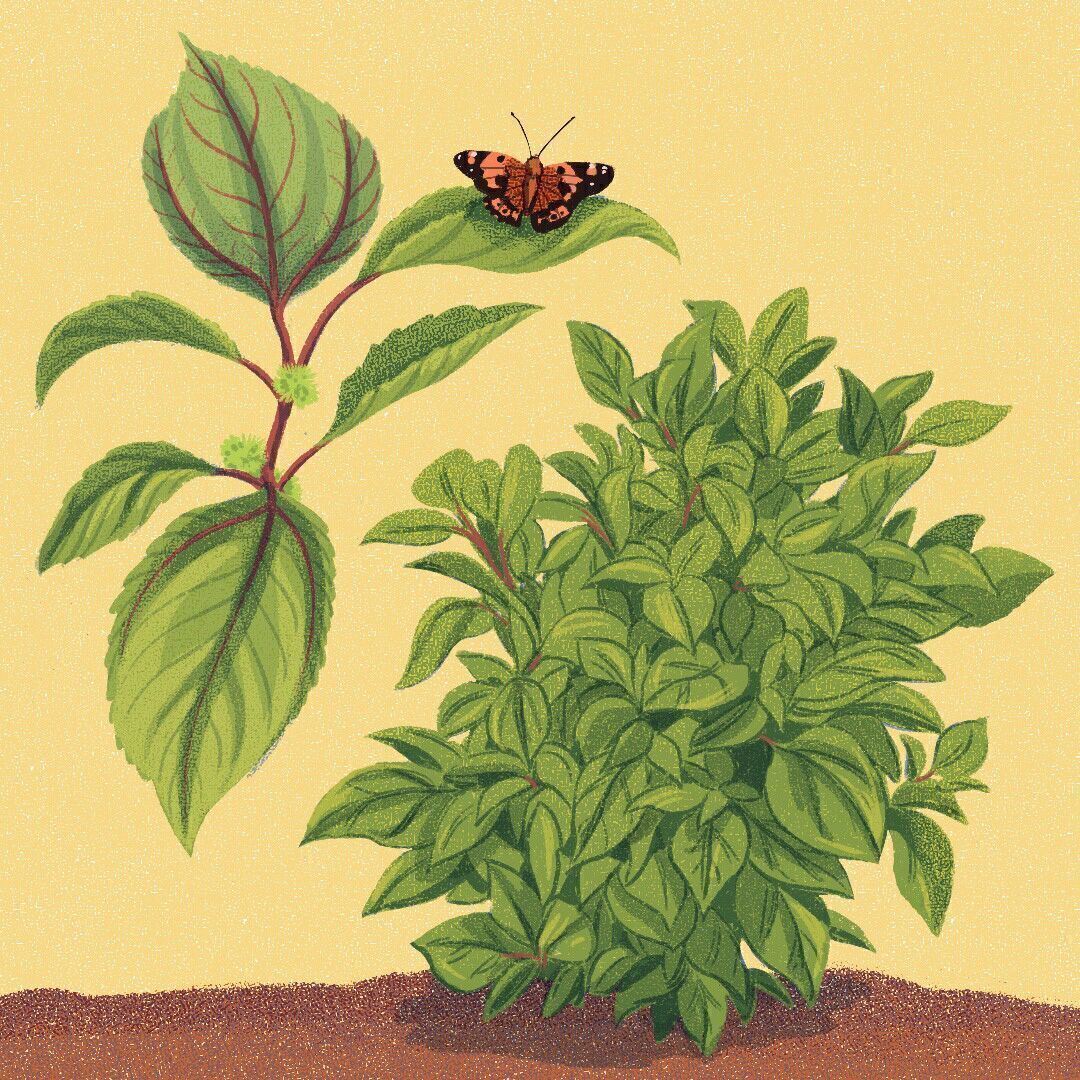
My own relationship to mamaki began with an impulse purchase, and that moment is worth reflecting on. I bought a plant with deep cultural and ecological significance using the same unthinking consumer logic I might apply to any bottled drink. Moving forward, I plan to take three concrete steps. First, I will learn to identify mamaki and better understand its ecological role, including its importance to the pulelehua butterfly and the consequences of continued habitat loss. Second, when I do purchase mamaki products, I will prioritize brands and farms that are transparent about their sourcing and that directly support growers and knowledge holders, treating that level of transparency as a basic expectation rather than an added benefit. Third, I will apply the same ethical question addressed above, not “What is this plant worth to me?” but “What do I owe it?” to other commercialized native and Indigenous plants I encounter, recognizing that mamaki is only one example of a broader pattern in which traditional ecological and medicinal knowledge is transformed into a market trend faster than it is being honored through reciprocal relationship.
Mamaki’s movement from forest to grocery store shelf is neither a simple success story nor a straightforward warning about commercialization. Instead, it shows an unresolved tension between a Hawaiian understanding of land as something to be served and a market system that continually asks what the land can produce for human use. Deep ecology provides a useful framework for evaluating that tension because it insists that mamaki’s value does not begin or end with its usefulness to people, whether as medicine, fiber, or a bottled beverage. At the same time, the case of mamaki also shows the limits of any framework that does not fully account for Indigenous relationships to land, knowledge, and responsibility. Companies such as Shaka Tea and organizations such as United Plant Savers offer partial models of stewardship, while growers like Matt Drayer and Roberta Taira confront the tension between livelihood and care in more direct ways. Ultimately, the central question is still unresolved: whether commercialization can be shaped in ways that genuinely serve the plant and its ecological and cultural relationships, rather than simply extracting new value from them for integrated “health” trends.
Work Cited
BevNET.com. King’s Hawaiian Acquires Shaka Tea. BevNET, 2 Feb. 2022, www.bevnet.com/news/2022/kings-hawaiian-acquires-shaka-tea/
Luke, Timothy W. “Deep ecology: Living as if nature mattered: Devall and Sessions on defending the earth.” Organization & Environment 15.2 (2002): 178-186. https://www-jstor-org.eres.library.manoa.hawaii.edu/stable/26161821
Food Navigator-USA. King’s Hawaiian Parent Company Acquires Shaka Tea, Accelerating Growth Path for the Hawaiian Beverage Brand. 4 Feb. 2022. https://www.foodnavigator-usa.com/Article/2022/02/04/King-s-Hawaiian-parent-company- acquires-Shaka-Tea-accelerating-growth-path-for-the-Hawaiian-beverage-brand/
Hawai‘i Division of Forestry and Wildlife. Mamaki (Pipturus albidus). State of Hawai‘i, n.d. https://dlnr.hawaii.gov/forestry/plants/mamaki/
Heaton, Thomas. This Ancient Hawaiian Plant’s Popularity Has Soared. Not Everyone Is Pleased. Honolulu Civil Beat, 6 Feb. 2022, www.civilbeat.org/2022/02/this-ancient-hawaiian- plants-popularity-has-soared-not-everyone-is-pleased/
Naess, Arne, and George Sessions. The Deep Ecology Platform. 1984. https://theanarchistlibrary.org/library/arne-naess-and-george-sessions-basic-principles-of- deep-ecology
Tea & Coffee Trade Journal. King’s Hawaiian ‘Ohana Acquires Shaka Tea. 16 Feb. 2022.
United Plant Savers. “About Us” and “At-Risk Species List.” United Plant Savers, unitedplantsavers.org, n.d. https://unitedplantsavers.org/wp-content/uploads/2020/04/UpS-Journal-Compendium-2000-2019-Vol-1-for-web.pdf

Author’s Bio:
Caleb Dodson. I’m currently an undergraduate student at University of Hawai’i at Manoa part of the Life Science’s Department on a premedical track. His interests are in emergency medicine with integrative/preventative practices. He grew up in the beautiful biodiverse area of Northern California amongst old growth coastal redwood forests and pristine rivers, in a small county known as Del Norte. He enjoys spending time outdoors playing beach volleyball and hiking, along with educating himself, and others, about the ways in which we can sustain our health more equitably with our environment. This article was written for a UHM course entitled “Human Values and the Environment” taught by HTMC member and UHM Professor Emerita Dr. Betsy Fisher.