
Kaiwi Coast Plant Walk with Kenji
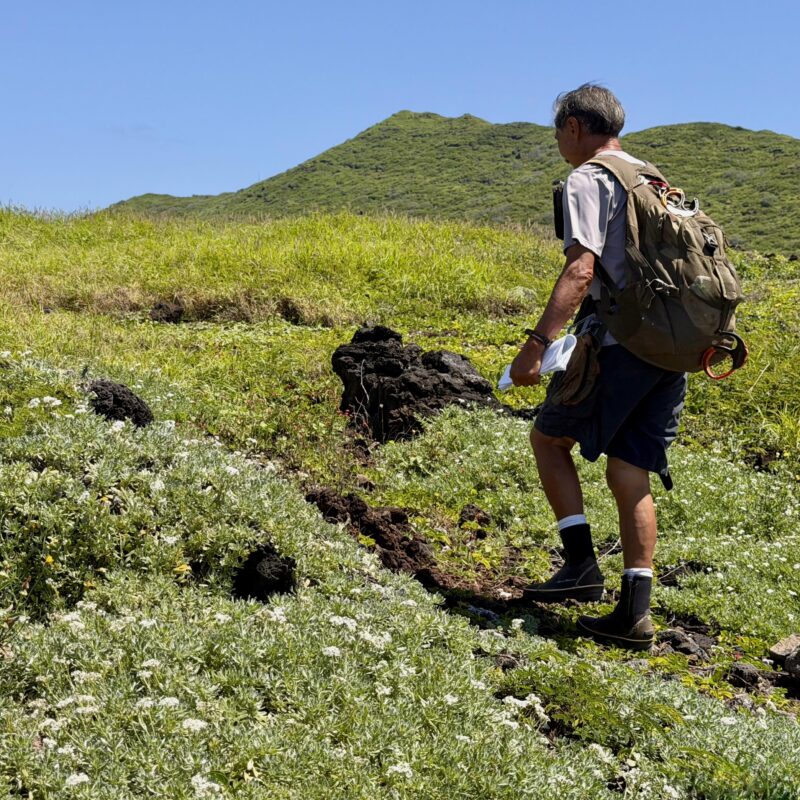
If you have ever had the privilege of going on a plant walk with HTMC member Ken Suzuki — known to most as Kenji — you will know how lucky we were to spend a morning with this impressively knowledgeable man. On Saturday, April 26th, Kenji led a group of fifteen of us along the Kaiwi Coast, a stretch he has known since childhood, when he came here to go shore fishing with his dad.
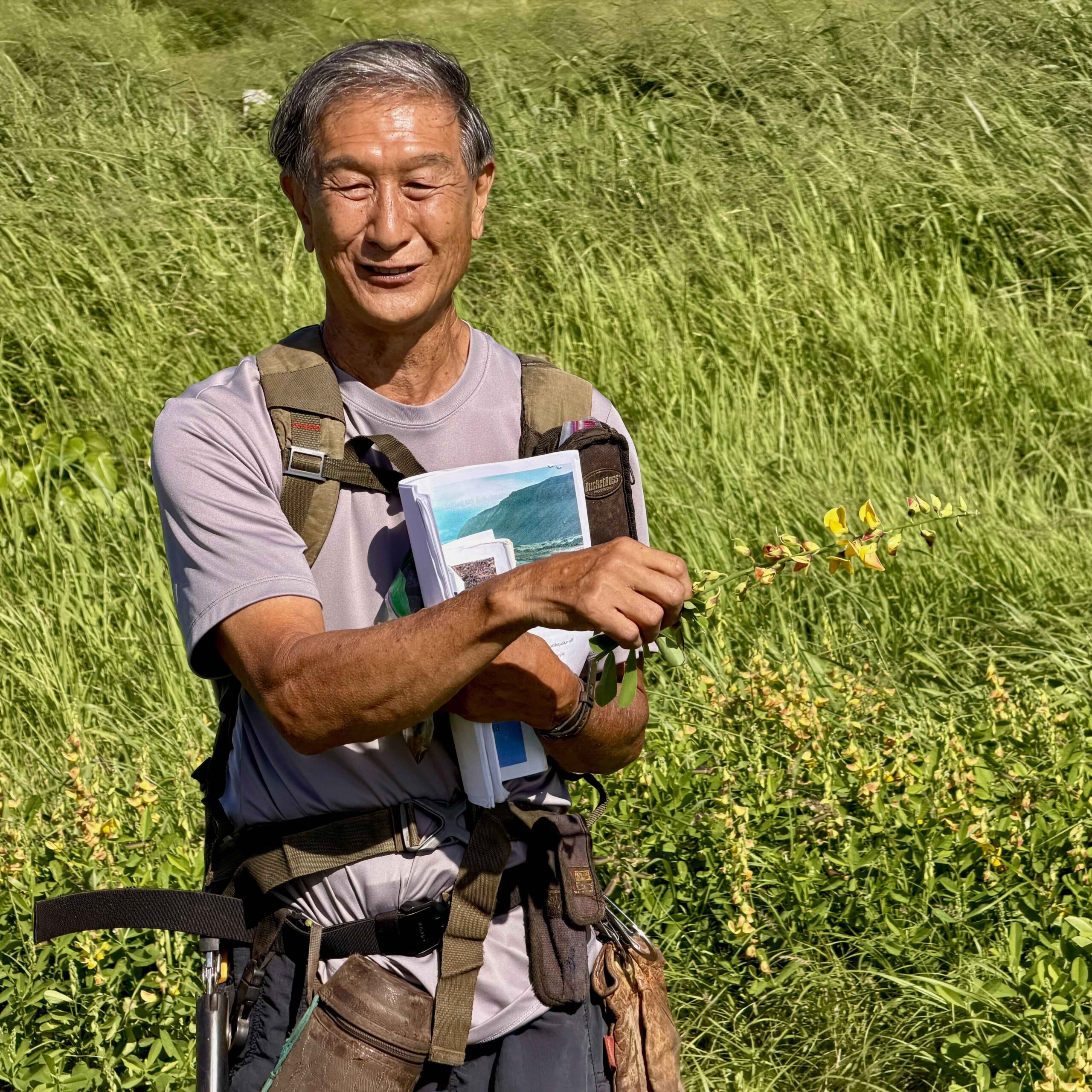
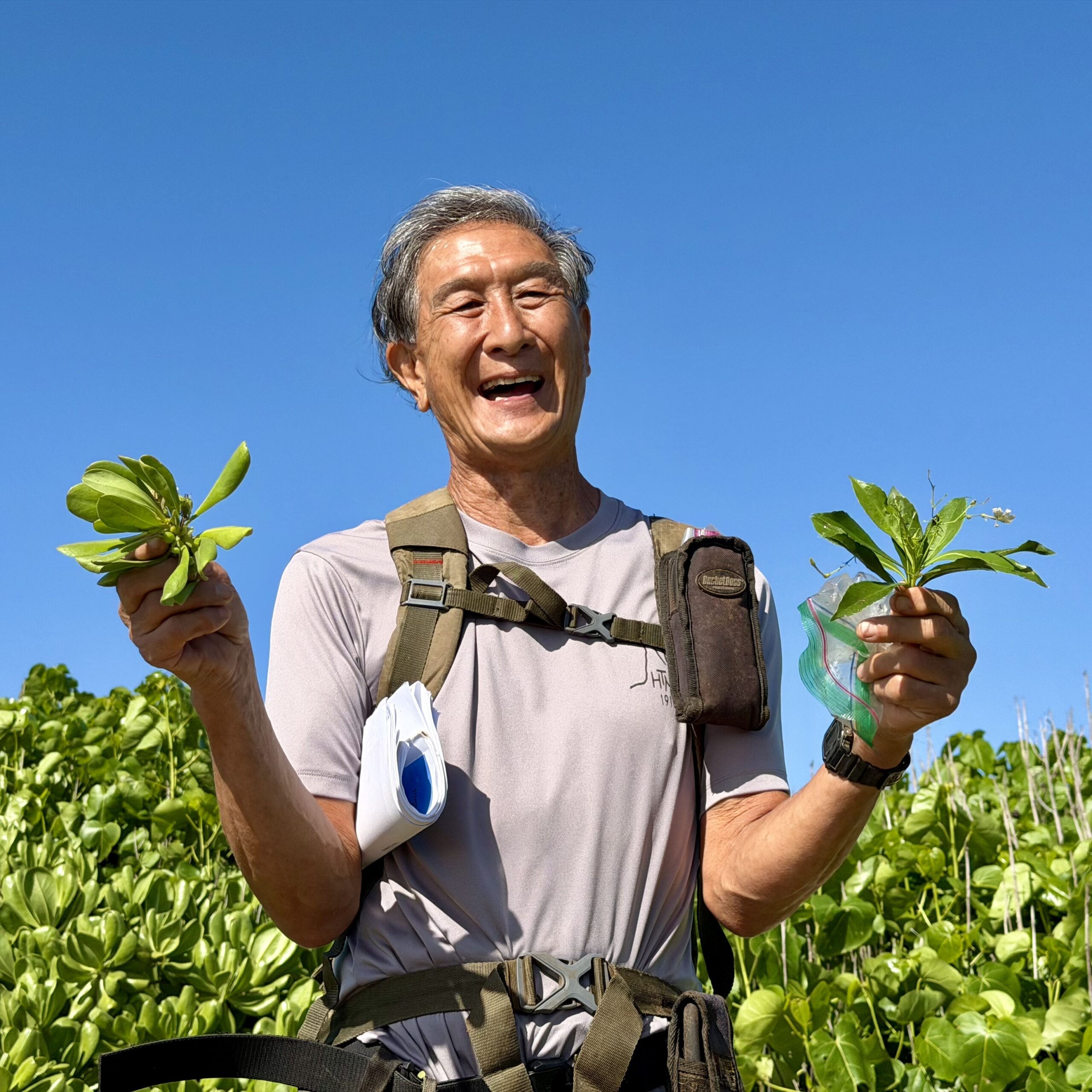
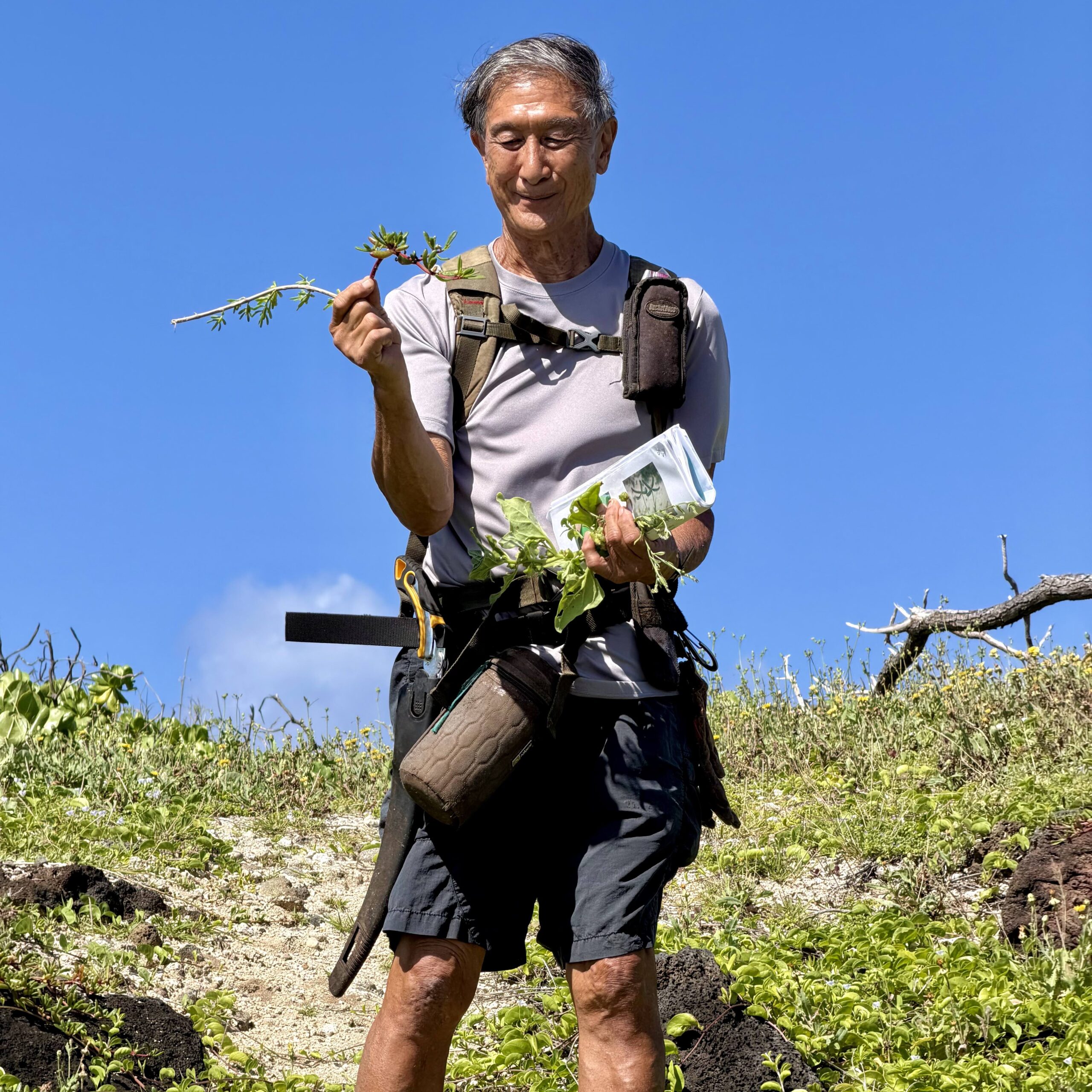
Kenji holding new invasive wildflower and naupaka kahakai and kuahiwi (collected prior)
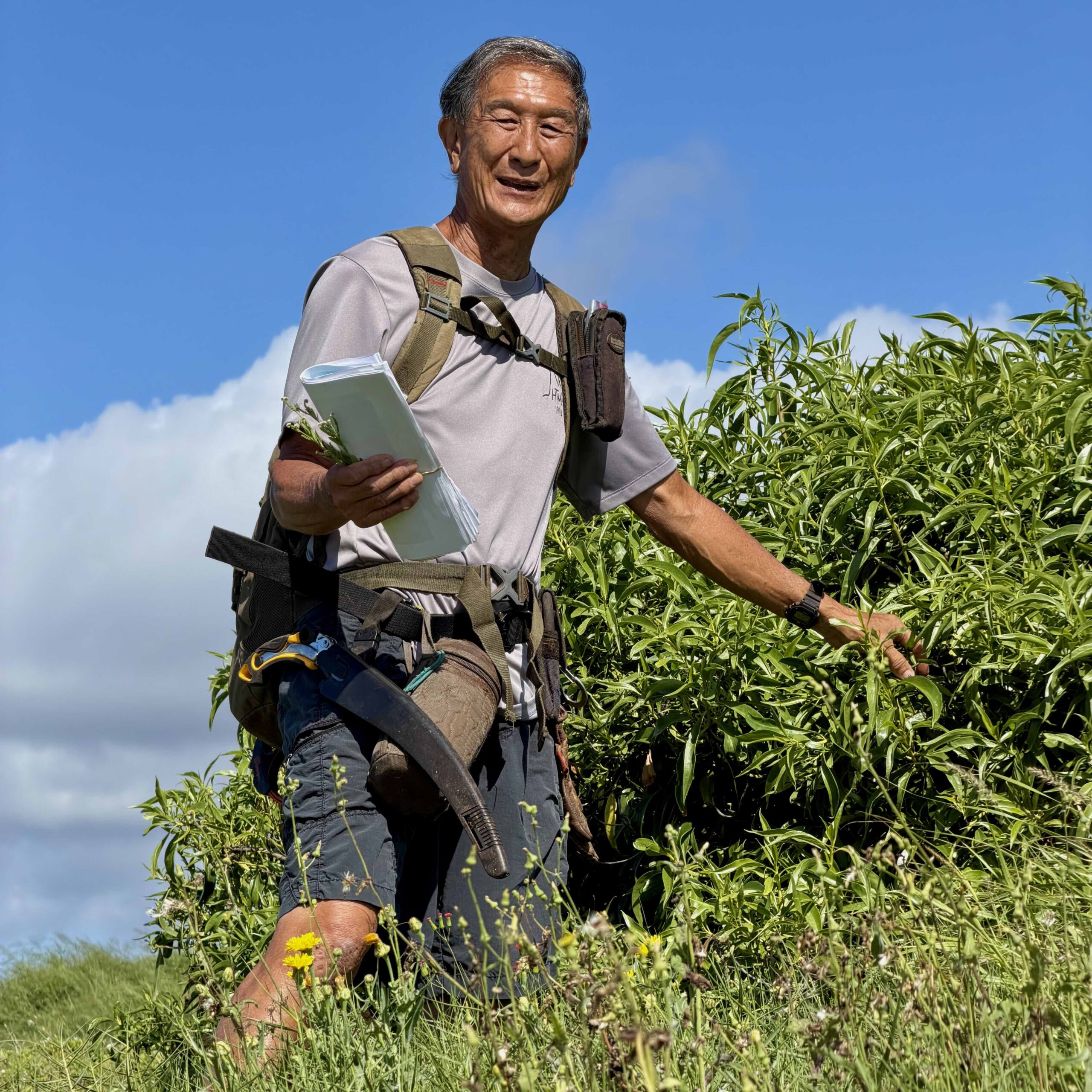
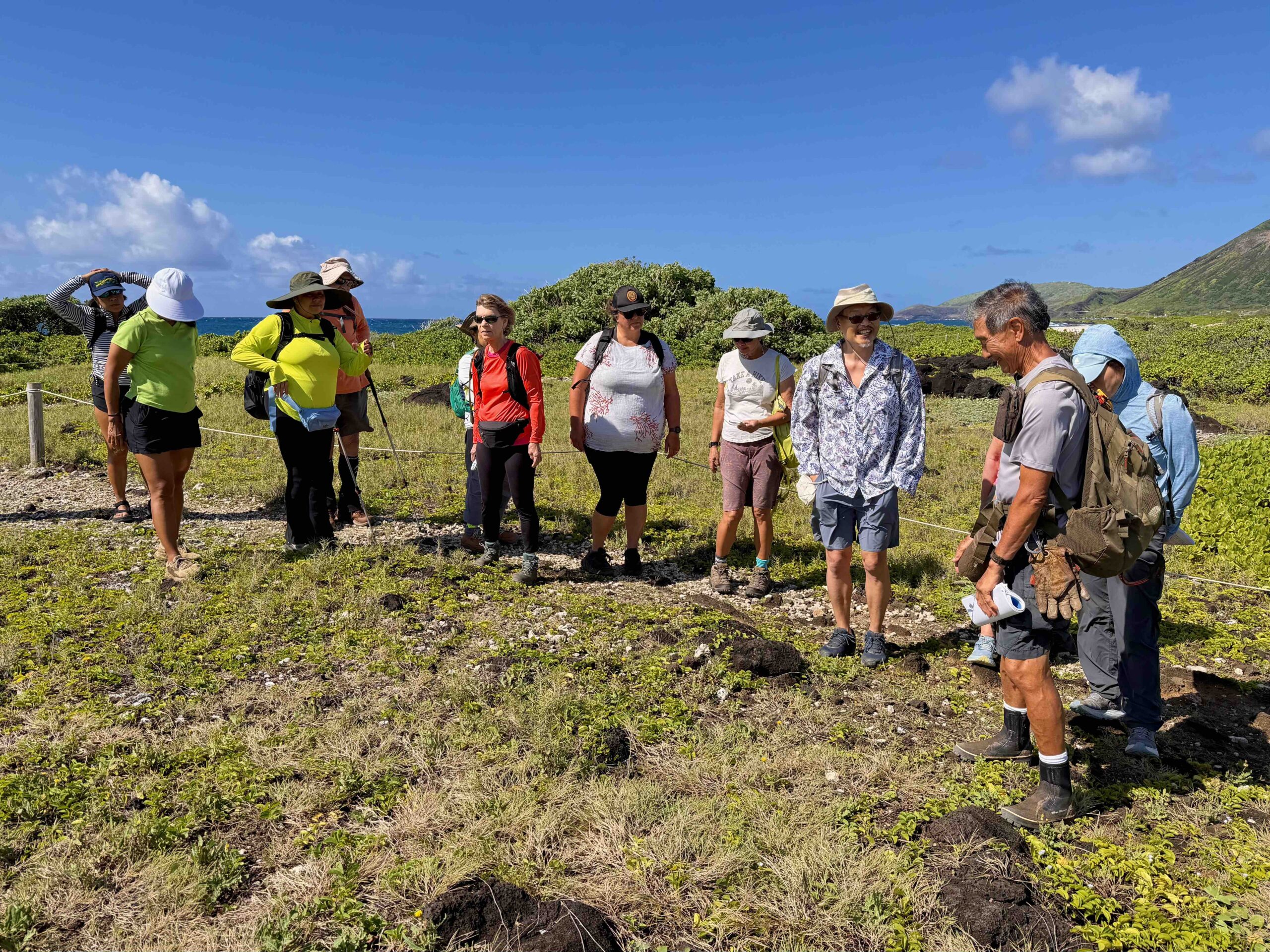
Kenji pointing out Naio (false sandalwood) and comparing nonnative pickleweed with native ‘akulikuli.
Before we set out, Kenji gave a brief history of the area. Long known as Wawamalu — meaning “shady valley” — the coast is more commonly called Alan Davis, after the rancher whose home stood here until the 1946 tidal wave swept it away. From the first steps of the walk, Kenji pointed out a new flowering plant he had never seen in this spot before, having emerged after the heavy March rains. He then gestured at the surrounding scrub — what most of us might dismiss as roadside weeds — and revealed that many of them are native plants, and that this stretch is one of the best places on the island to find coastal species.
Kenji’s botanical education came through years of trail clearing with HTMC alongside his mentor, Kost Pankiwskyj. Each Sunday, Kenji made it his goal to learn one new plant; Kost would quiz him on it at the end of the day. That discipline shows. Kenji now makes, prints, and freely shares a variety of detailed booklets of the plants found in select areas of O’ahu — including the recently updated one that he handed out on this hike: Plants Found on the Kaiwi Coastline. Filled with photographs and descriptions, the booklets are living documents he continually updates as local groups add more native plantings to the area.
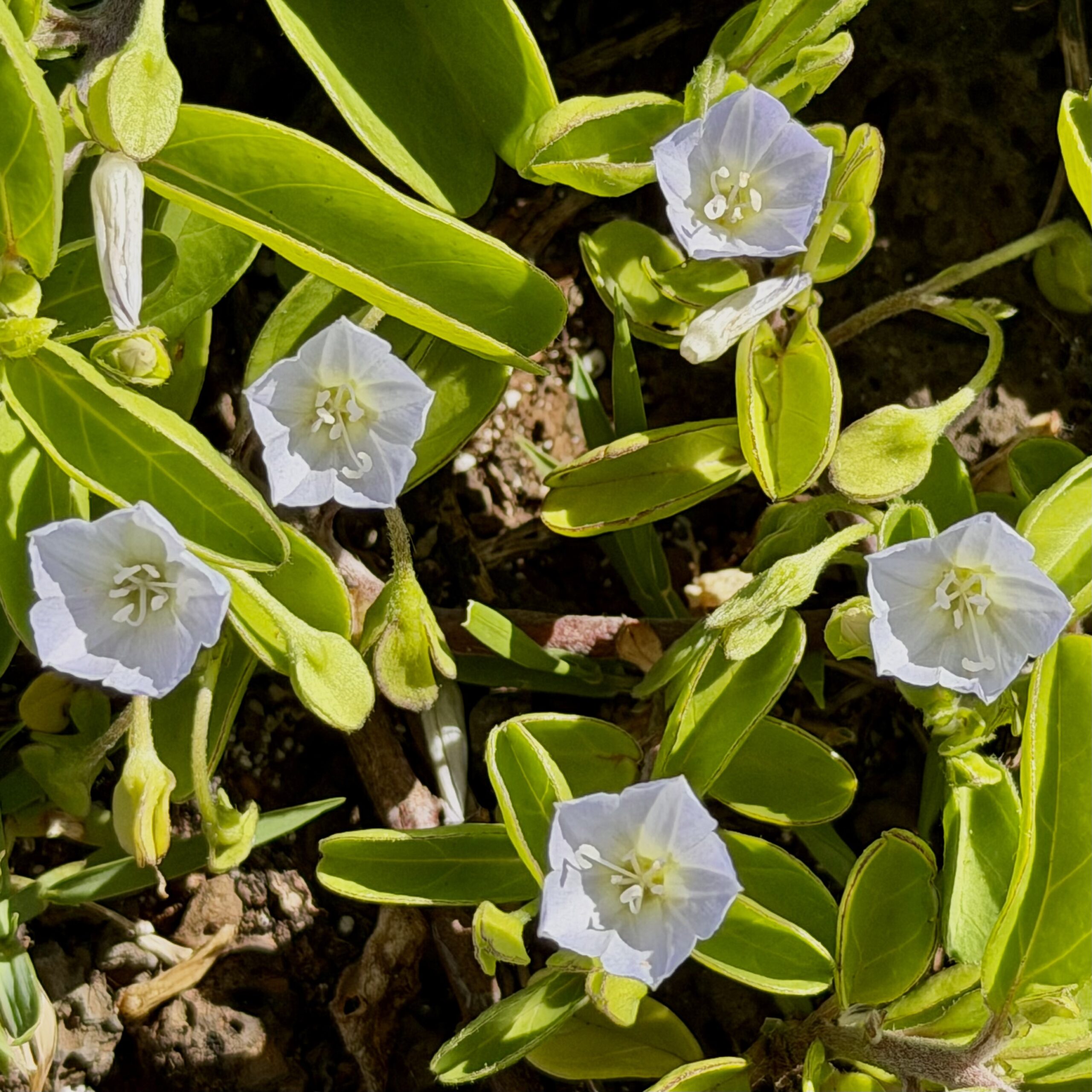
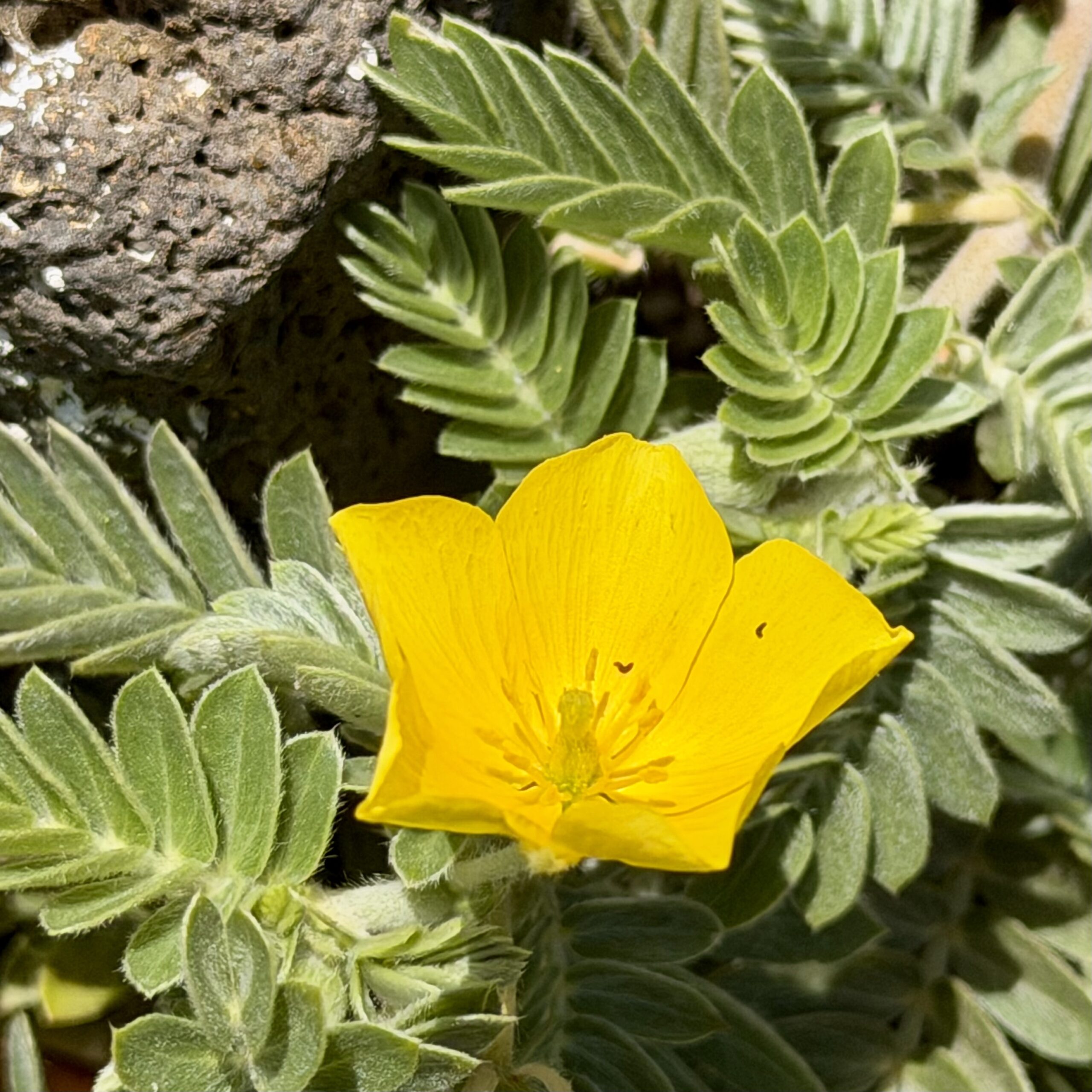
Pa u o hi’iaka (native endemic*) Nohu (native indigenous)
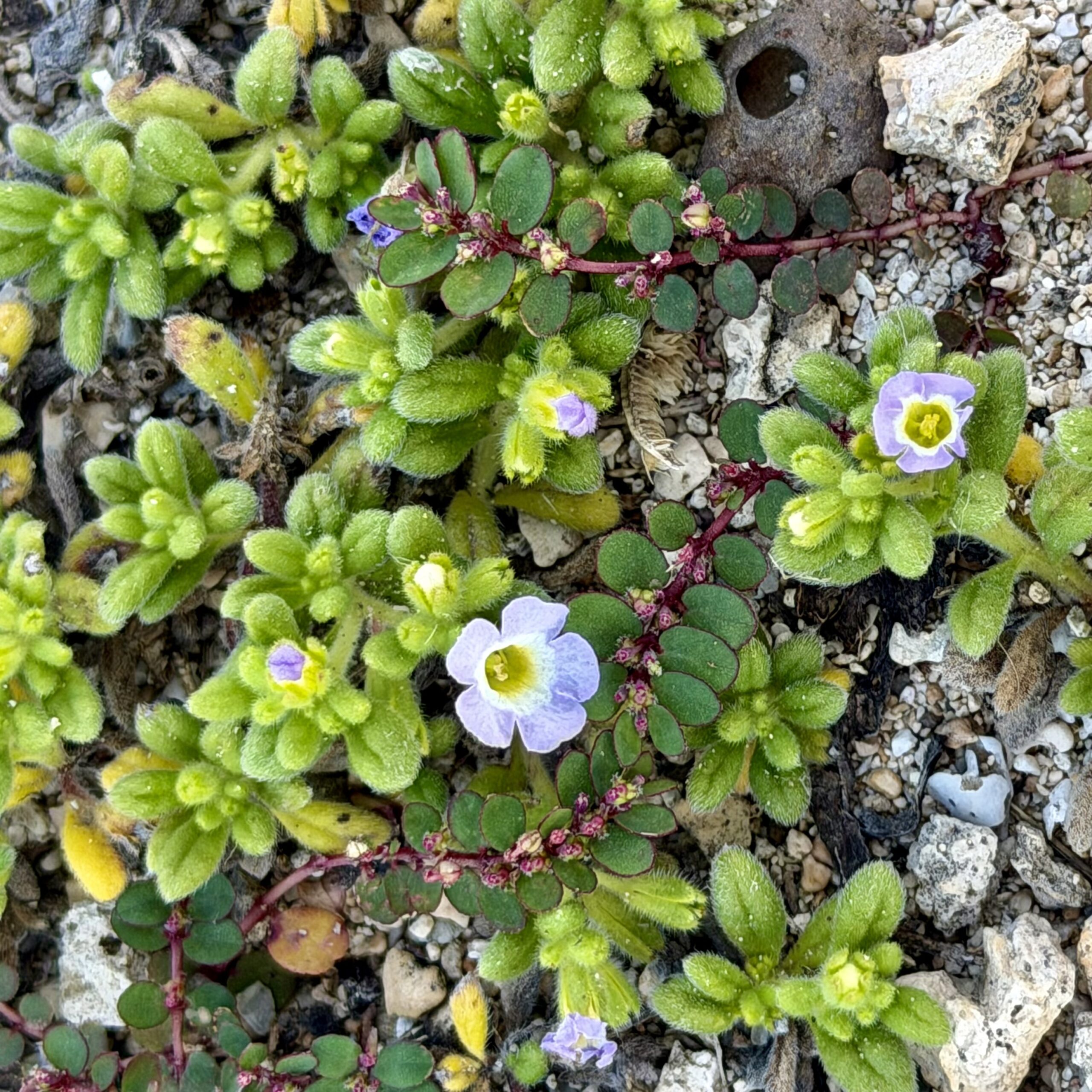
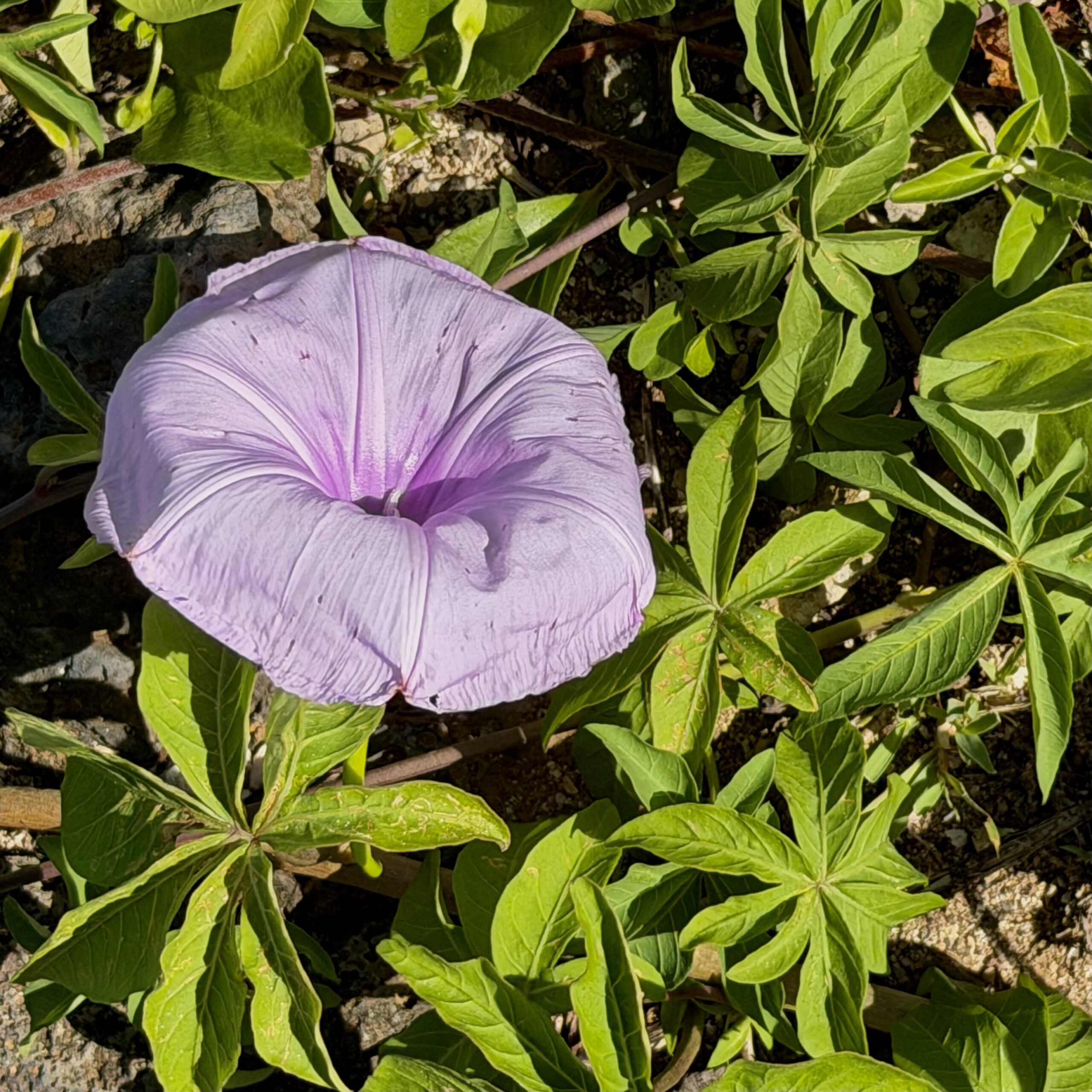
Hinahina kahakai (native endemic) Koali’ai (indigenous)
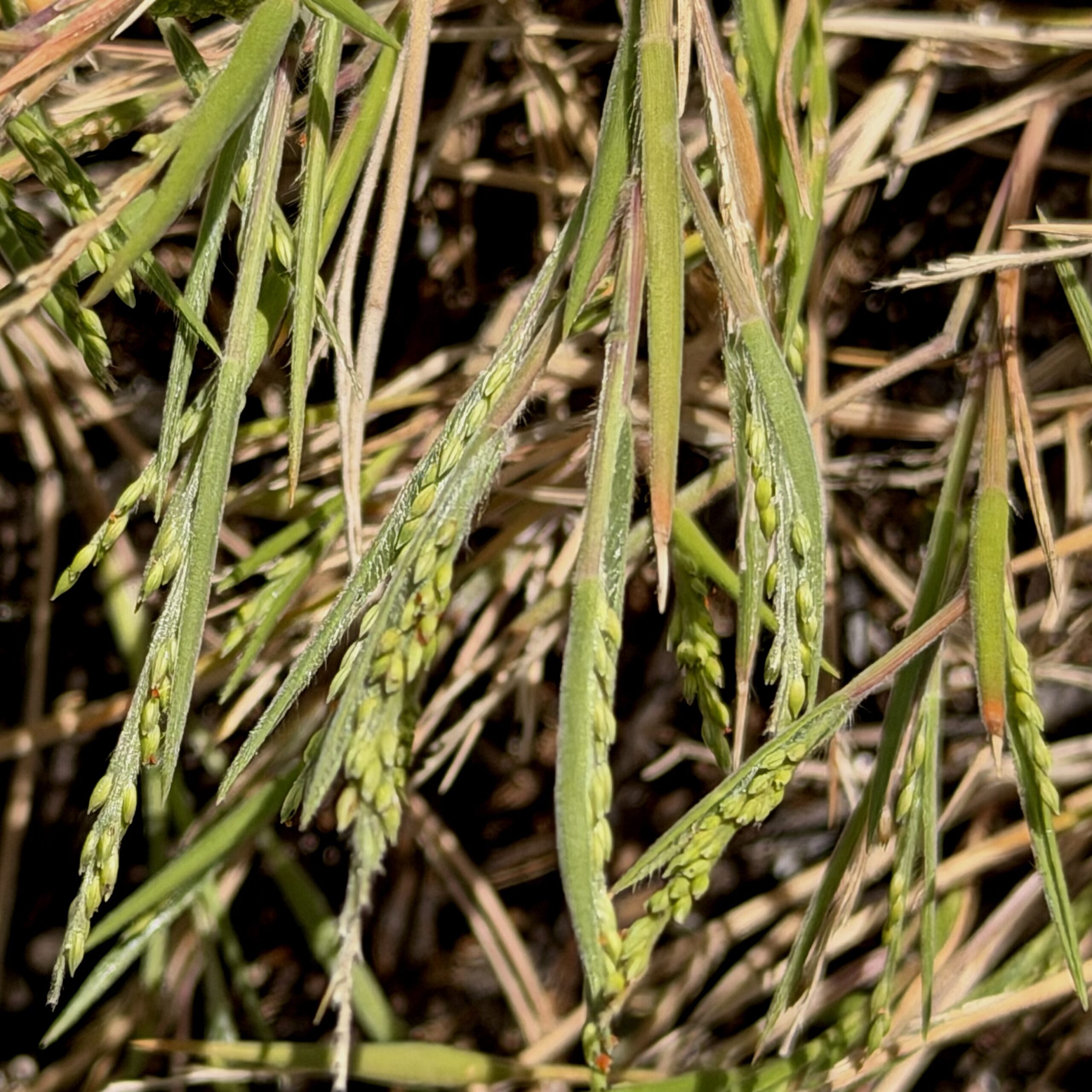
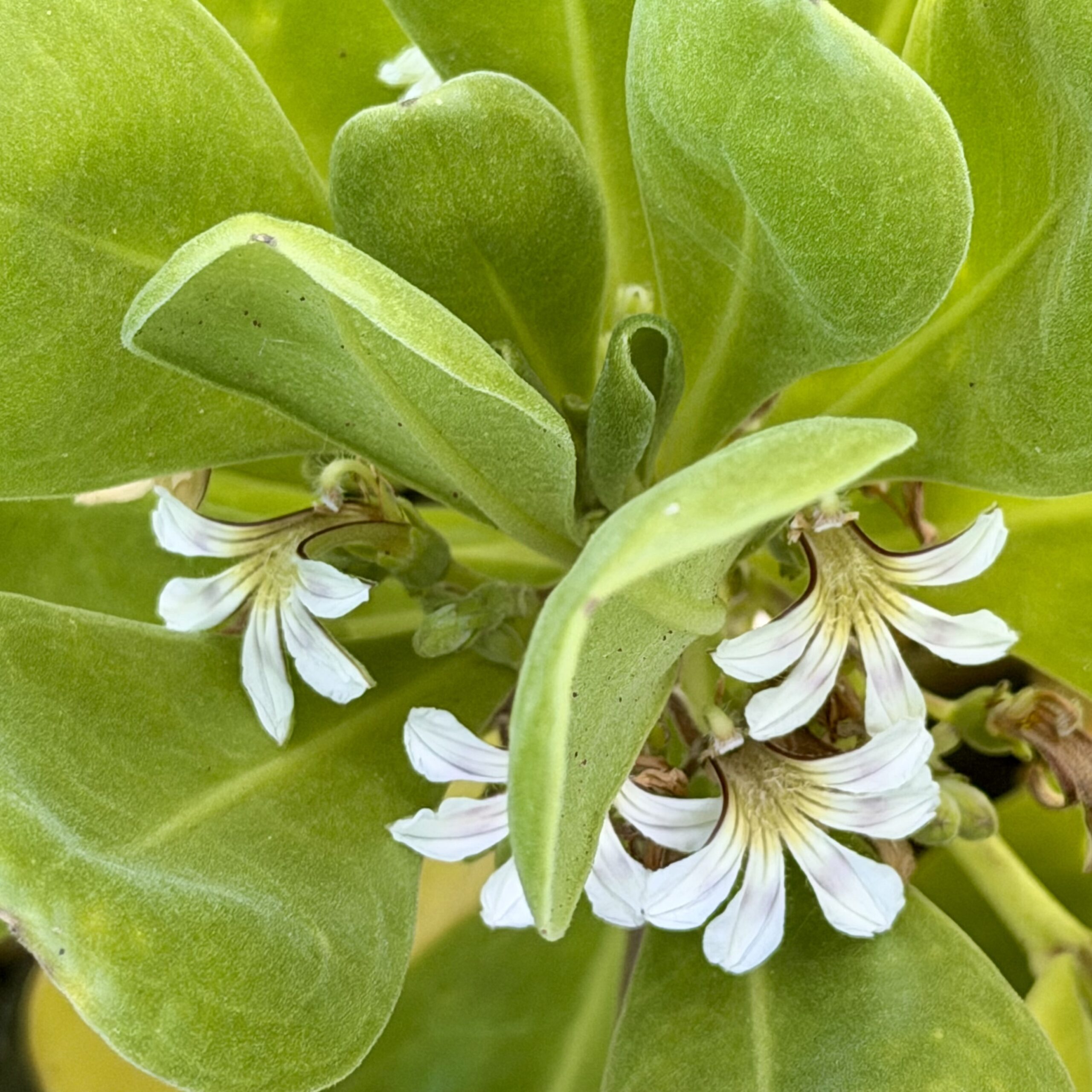
Panic grass (native endemic) Naupaka Kahakai (native indigenous)
Slowly our group made its way to the rocky outcropping called Kapaliokamoa — Pele’s Chair — pausing along the way to examine and discuss the plants. On a cliff above the crashing waves Kenji went off to find and then share his pohaku – an amazing rock with a face carved into it that he spotted years ago while fishing. As the sun climbed and the temperature rose, we eventually wound our way back to the cars, where Kenji had cold drinks and snacks waiting for the group.
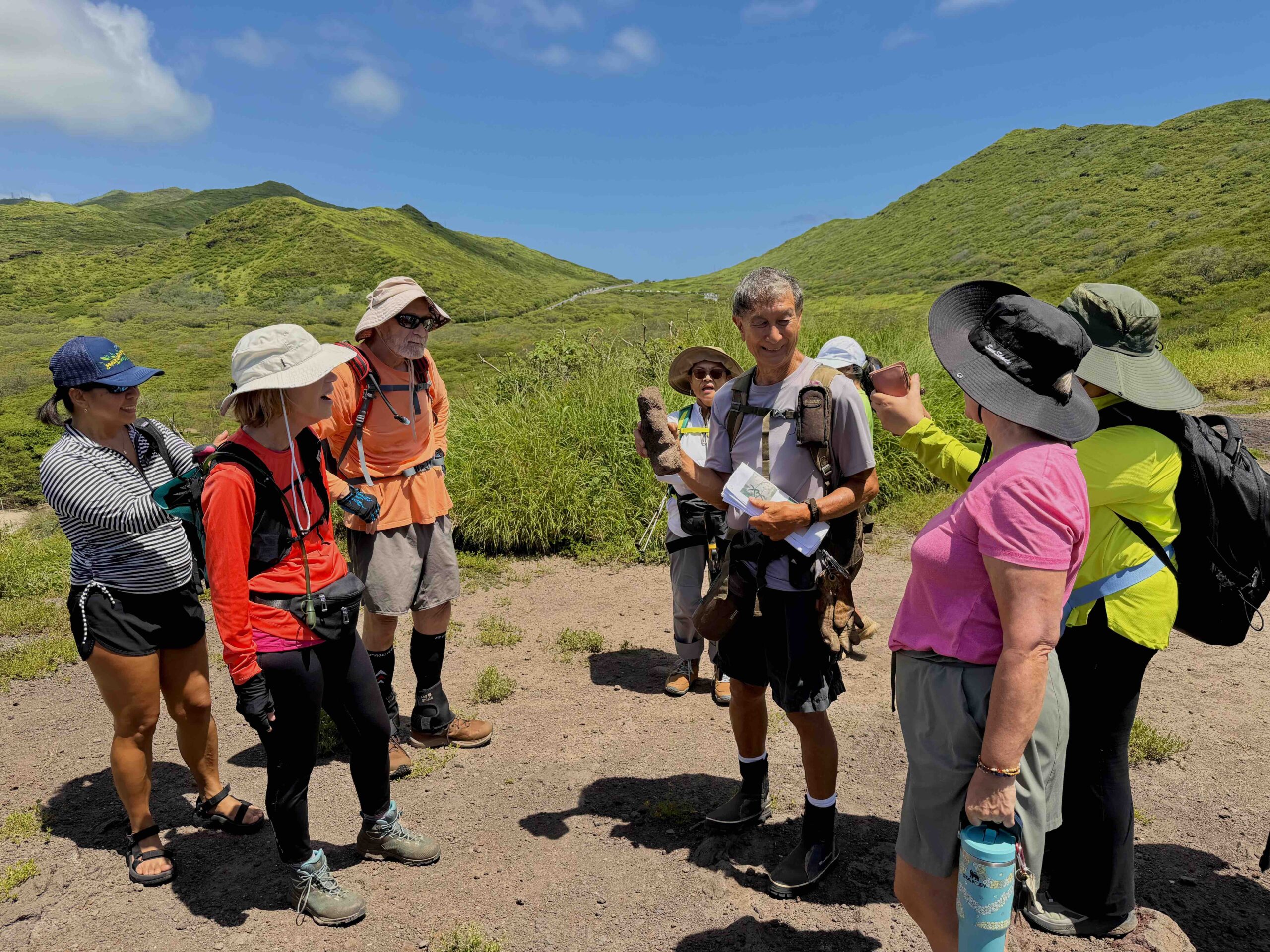
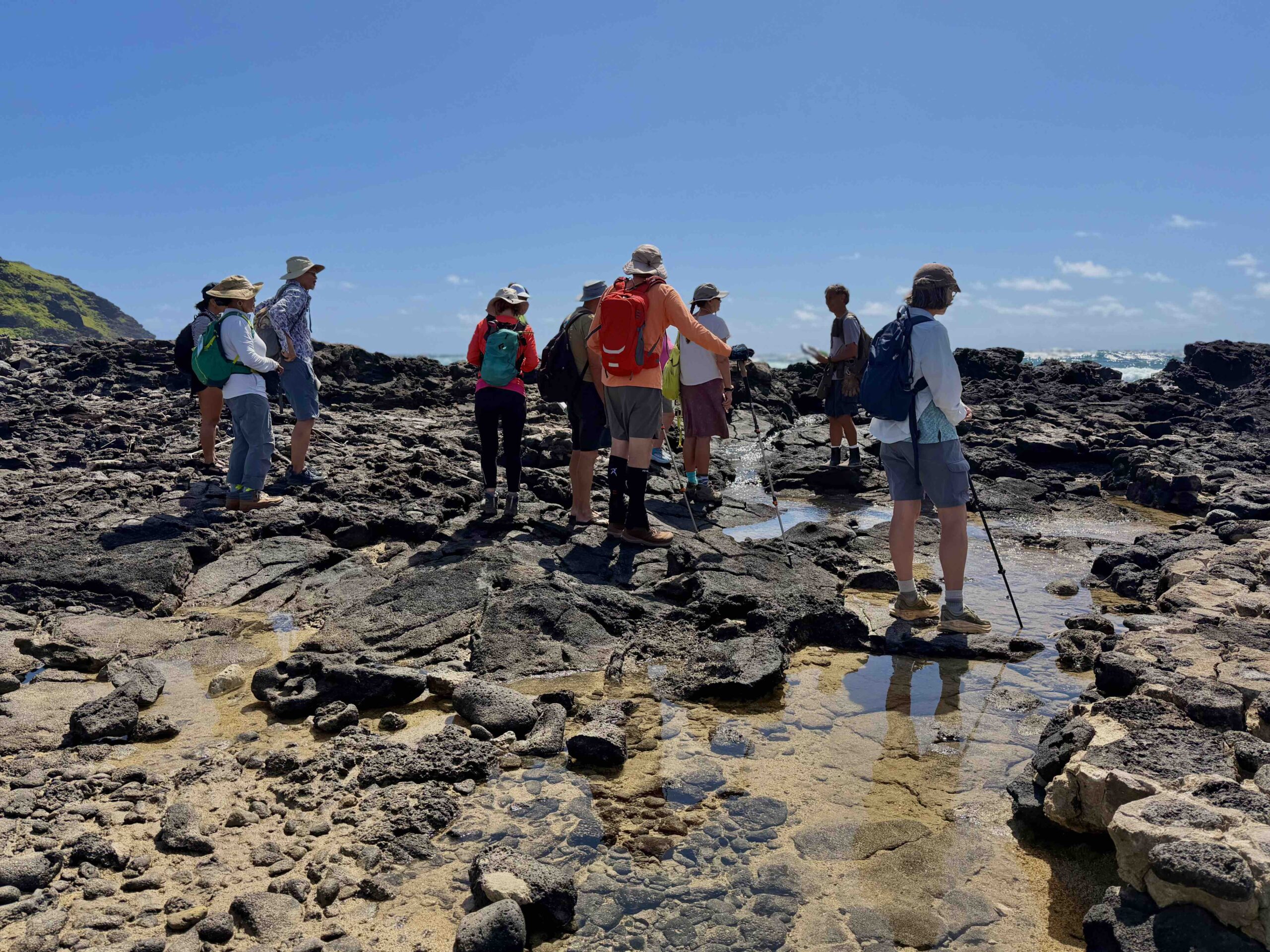
Kenji sharing his pohaku Viewing the salt water stream
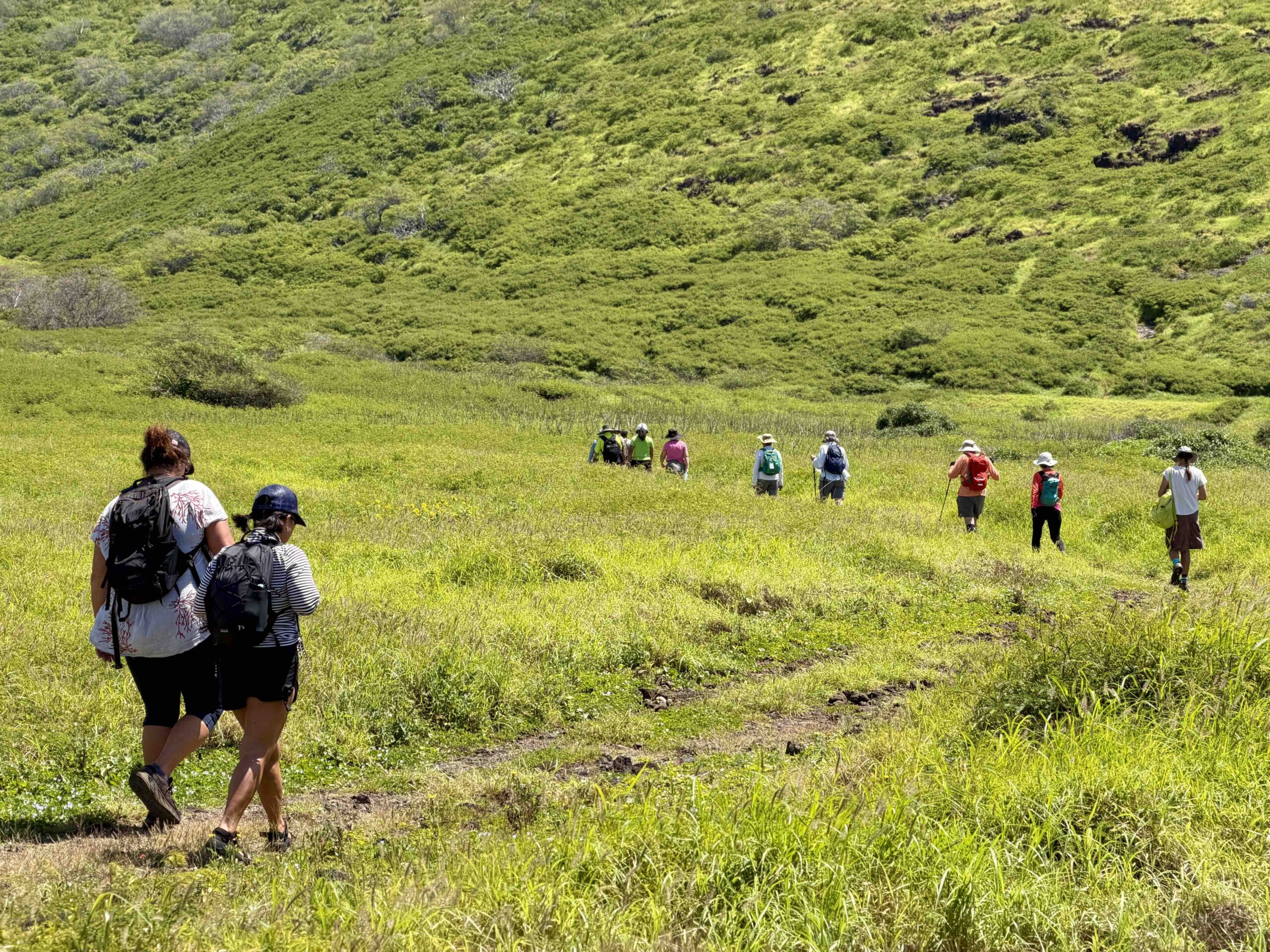
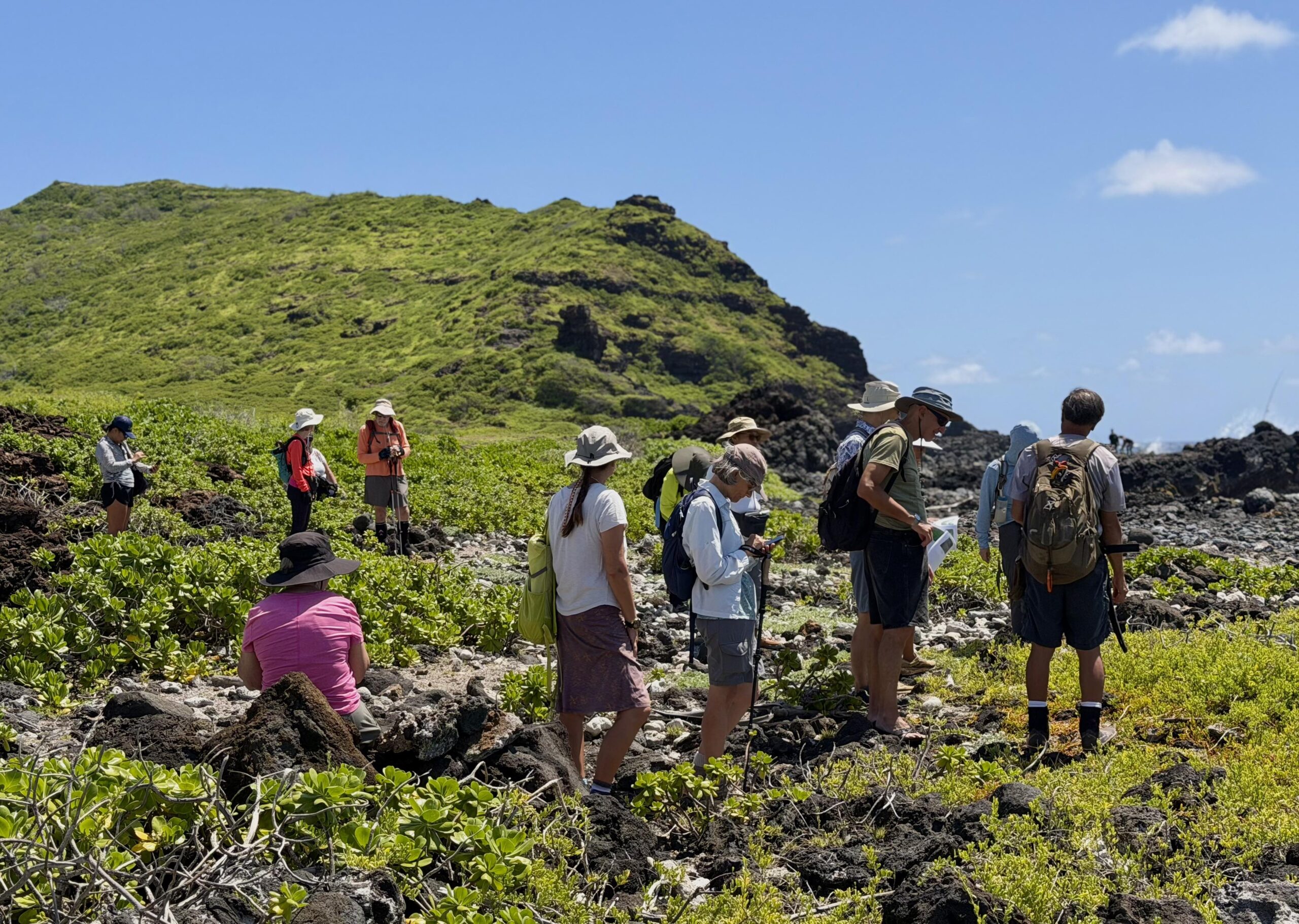
Walking through invasive grasses Pointing out ohelo kai, surrounded by hinahina
Thanks to Kenji, this hike has been a fixture of the HTMC hike schedule for over 25 years, generally held in spring when the rains bring the plants into full flourish. This year after multiple storms, we encountered many of the beautiful native species along with an abundance of introduced plants documented in Kenji’s booklet. Surrounded by invasive grasses, Kenji expressed concern for wildfires once they dry up this summer. And another bittersweet note: the old wiliwili tree that had long been a landmark of this coastline, and the recently planted maiapilo were no more.
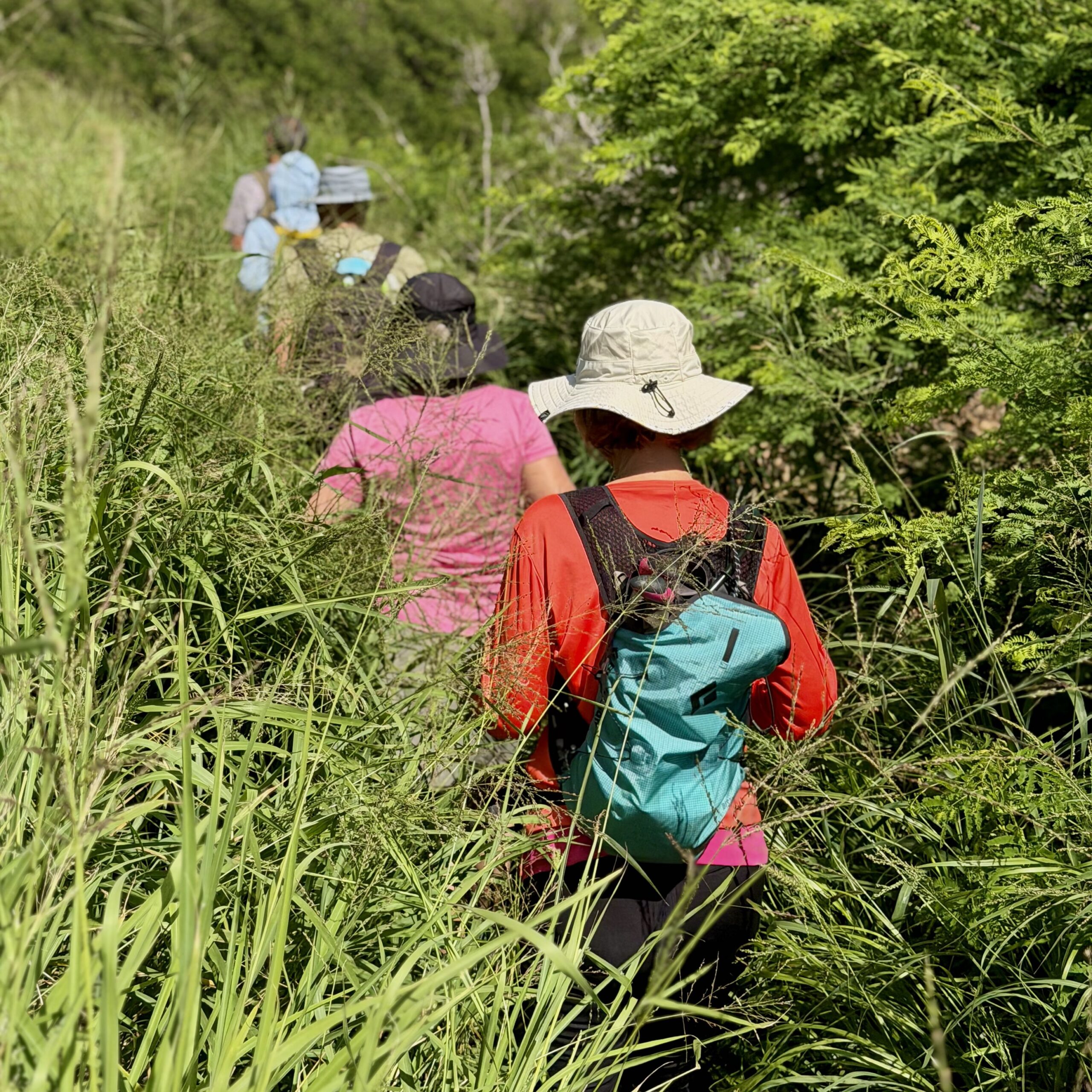
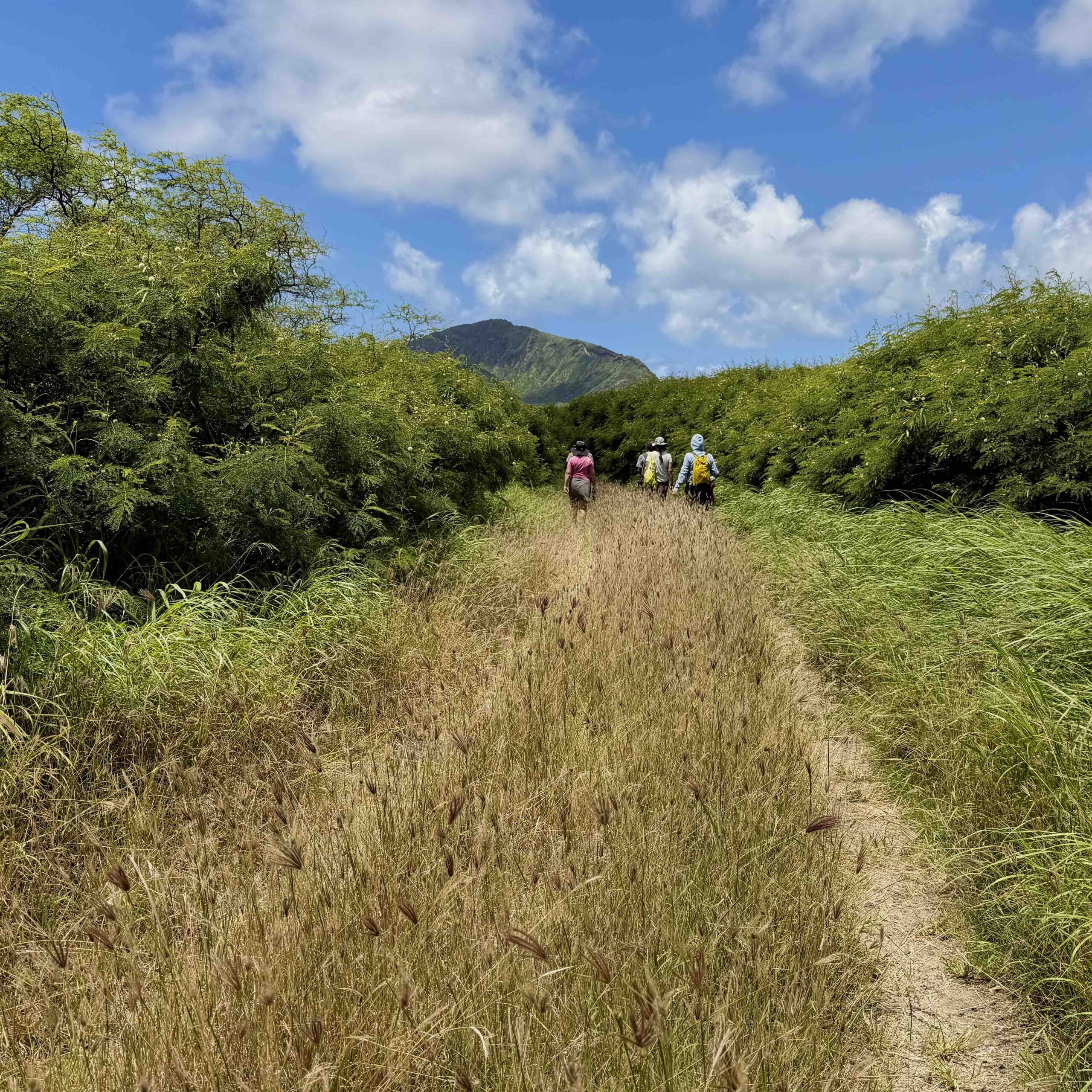
Our thanks to Kenji for another memorable, and deeply informative morning along the kaiwi coast. If only we could all learn one new native plant each week like the ever-inspirational Kenji! And if you missed Kenji’s plant walk, keep an eye on the schedule for future offerings.
*Kenji’s definition of terms from his booklet Plants found along the Kaiwi coastline:
Native: A plant that has arrived in Hawai’i without the help of humans. These plants came here on the wind, in or on a bird, floating or rafting on the ocean. The two types of native plants are:
-
- Indigenous: A plant that is found naturally in other parts of the world.
- Endemic: A plant this is found only in Hawai’i.
All photos in this article by Hawkins Biggins